Tomb Raider King
Tomb Raider King starts with a premise that sounds almost designed to attract Solo Leveling comparisons: mysterious supernatural objects appear, people gain absurd powers from them, and a betrayed protagonist gets another chance to become overwhelmingly powerful.
But there is one major difference.
Seo Joo-Heon doesn’t begin his second life as a weak nobody who needs to discover his potential. He already knows exactly how this world works. He knows which tombs will appear, which relics are valuable, who will try to steal them and which people will eventually become powerful.
That changes the entire power-fantasy formula.
Joo-Heon’s greatest weapon isn’t simply a supernatural ability. It’s information.
The first season of Tomb Raider King uses that idea to build a fast-moving revenge story around relic hunting, time travel and increasingly ridiculous supernatural abilities. It isn’t always subtle, and its animation doesn’t consistently match the ambition of its source material. But when Joo-Heon starts manipulating events because he knows what is coming, the series becomes considerably more entertaining than its familiar opening suggests.
Overview
The world of Tomb Raider King changes when mysterious tombs begin appearing across the planet.
Inside those tombs are relics connected to myths, legends and ancient stories. Obtaining one can give a person an extraordinary ability, turning relics into the foundation of a new global power struggle.
Joo-Heon is already an experienced tomb raider when the story begins. He works for Taisei Oogawara, a powerful man who uses relics to build his influence.
Joo-Heon’s life ends when Oogawara betrays him.
Instead of staying dead, however, Joo-Heon is sent fifteen years into the past.
He remembers everything.
The tombs haven’t appeared yet. The relics haven’t been claimed. The people who will eventually become powerful haven’t reached that point.
Joo-Heon therefore gets something far more valuable than a generic “second chance.”
He gets the future as a cheat sheet.
That is the hook that separates Tomb Raider King from many regression power fantasies.
Story Summary: What Is Tomb Raider King Actually Like?
The first episode establishes Joo-Heon’s previous life before immediately turning the story around.
He knows exactly what is going to happen because he has already lived through the catastrophe. Instead of spending dozens of episodes discovering the rules of the new world, he begins exploiting them almost immediately.
That creates a very different protagonist dynamic.
Joo-Heon isn’t trying to become powerful because he wants recognition. He has already seen what happens when other people control the relics. His motivation is revenge, but his knowledge gives him a practical reason to move quickly.
The early episodes therefore have an almost strategic quality.
Joo-Heon isn’t simply asking, “Can I defeat this enemy?”
He’s asking, “Who needs this relic, what does it do, and how can I make sure I get it before they do?”
Episode 4’s Midas auction is a good example. Rather than simply finding another dungeon and fighting a monster, Joo-Heon uses information about the future to enter a major relic auction and position himself around people who will eventually become important.
By Episode 6, the series is already pushing the relic system further with the Great Tombification.
Later episodes broaden the scale again. Pandora appears as an organization created to control relics, while the Tian Fu’s Relic storyline in Episode 11 introduces another type of situation in which the value of a relic isn’t simply measured by how destructive its power is.
The result is a story that moves quickly.
If you dislike protagonists who spend half a season wondering what their mysterious ability does, you’ll probably appreciate Joo-Heon.
He already knows.
Main Characters
Seo Joo-Heon
Joo-Heon is the reason the series works as well as it does.
He’s not particularly interested in being morally admirable. He lies, manipulates people and uses whatever advantage is available to him.
That makes him more entertaining than a conventional heroic protagonist.
His future knowledge also changes the way he interacts with danger. When another character sees an unknown relic, Joo-Heon can already be thinking about its future owner, limitations and value.
Yoshimasa Hosoya’s Japanese performance fits this version of Joo-Heon well because the character needs confidence without sounding like someone who is constantly surprised by his own abilities.
Irene Holton
Irene initially looks like the wealthy heiress archetype, but her position becomes more useful once the story starts dealing with the Holton family and the wider relic power structure.
Her relationship with Joo-Heon is also important because she isn’t simply another person waiting for the protagonist to save her.
The anime gives her enough agency that the partnership feels more useful than a standard hero-and-damsel arrangement.
Saori Hayami provides the Japanese voice, giving Irene a calmer presence compared with Joo-Heon’s much more aggressive personality.
Taisei Oogawara
Oogawara is the person responsible for Joo-Heon’s original downfall, so his importance isn’t just that of another villain.
He’s the person Joo-Heon is specifically preparing to destroy.
That changes their confrontations because the audience already knows that Joo-Heon isn’t operating from the same information level as his opponent.
Junichi Suwabe voices Oogawara in the Japanese version, bringing the character the kind of controlled authority you’d expect from someone accustomed to having other people obey him.
Yoo Jae-Ha
Jae-Ha becomes one of the more important figures around Joo-Heon as the story develops.
What makes him useful is that Joo-Heon doesn’t simply need powerful fighters. He needs people who can help him exploit the opportunities created by his knowledge of the future.
That distinction matters.
A regression story becomes boring if the protagonist can solve everything alone. Jae-Ha’s involvement helps prevent Tomb Raider King from becoming entirely dependent on Joo-Heon.
Oh Seung-Woo
Seung-Woo represents another side of the relic conflict.
His presence helps show that the series isn’t simply divided into “Joo-Heon versus one villain.” Multiple people have their own ambitions and reasons for wanting relics.
Nobuhiko Okamoto voices him in Japanese, adding another recognizable performance to a cast that includes several established voice actors.
Why You Should Watch Tomb Raider King
The best reason to watch Tomb Raider King is the satisfaction of seeing Joo-Heon exploit information other characters don’t have.
Episode 4’s Midas auction is particularly important because it demonstrates that the show doesn’t have to rely on conventional dungeon battles to make Joo-Heon feel powerful.
His advantage is preparation.
He knows what people will want before they know they want it.
He knows which relics matter.
He knows which events are about to happen.
That creates a different kind of tension from Solo Leveling. Jinwoo becomes powerful by surviving increasingly dangerous situations. Joo-Heon often enters situations already knowing what the prize is.
There’s also something entertainingly ruthless about watching him take opportunities away from people who haven’t even realized those opportunities exist yet.
For a power-fantasy fan, that’s the real addiction.
Animation & Art Style
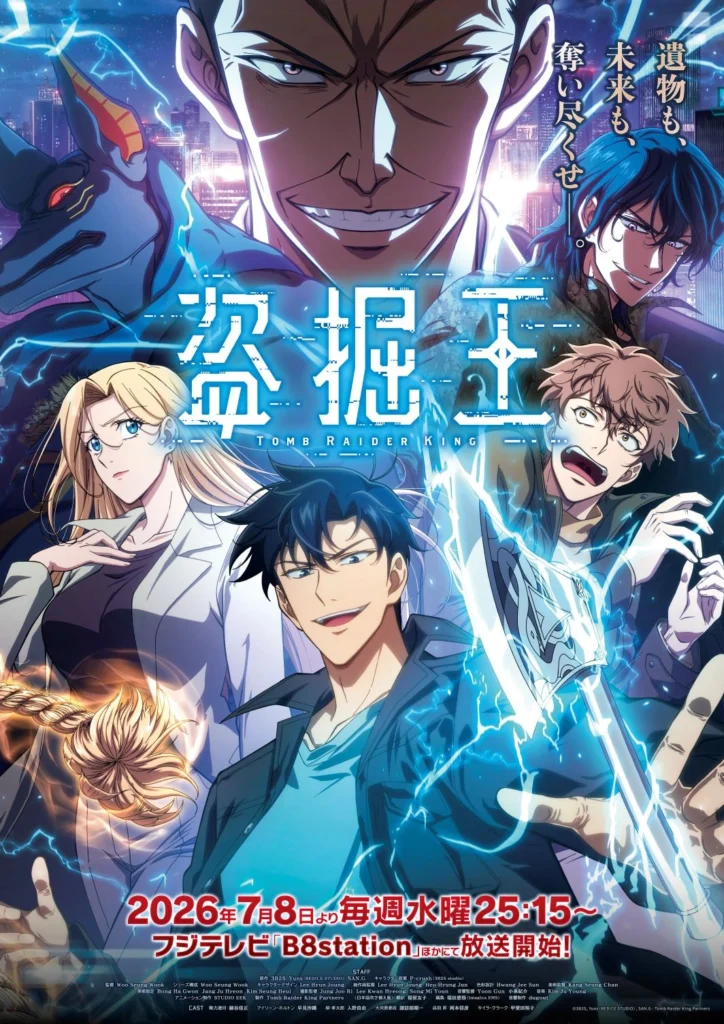
STUDIO EEK handles the animation, with Woo Seung Wook directing and handling series composition, Hyun Joung Lee serving as character designer and Ju Young Kim composing the music.
The animation is the show’s most inconsistent element.
The character designs are generally effective, particularly when Joo-Heon needs to look intimidating. The relics also benefit from the production’s willingness to mix supernatural imagery with more modern environments.
But don’t go into this expecting the production quality of Solo Leveling at its best.
Some action sequences are perfectly serviceable rather than spectacular. The production occasionally leans on simpler movement and presentation, especially when compared with the elaborate visual reputation of the original webtoon.
That criticism isn’t just nitpicking.
The premise constantly introduces abilities that are supposed to feel extraordinary. When the animation is restrained during those moments, the gap between the concept and the presentation becomes noticeable.
At its best, however, the series understands what needs to be visually emphasized: the appearance of relics, Joo-Heon’s abilities and the transformation of ordinary locations into supernatural battlegrounds.
The result is functional rather than consistently spectacular.
Music & Voice Acting
The Japanese cast is one of the production’s safer strengths.
Yoshimasa Hosoya voices Joo-Heon, Saori Hayami plays Irene, Junichi Suwabe voices Oogawara, Miyu Irino plays Jae-Ha and Nobuhiko Okamoto voices Seung-Woo.
The opening theme, “SHOW DOWN,” is performed by QWER. The song was also notable as QWER’s first Japanese anime theme and their Japanese-market debut.
The ending theme is “To Be Continued,” also performed by QWER.
The music generally understands the show’s intended identity: fast, aggressive and built around the idea of Joo-Heon constantly moving ahead of everyone else.
The Japanese voice cast is particularly helpful because some of the dialogue is deliberately arrogant. Joo-Heon needs to sound like someone who has already survived the apocalypse once and knows exactly how ridiculous everyone else is being.
Hosoya sells that attitude better than the writing occasionally deserves.
The Real Appeal of Tomb Raider King: Joo-Heon Is Basically Playing With the Future’s Save File
This is where I think the series is more interesting than its “Solo Leveling clone” reputation suggests.
Imagine playing a game after already completing it once.
You know where the rare items are.
You know which bosses are dangerous.
You know which characters eventually become important.
You know which choices lead to disaster.
Now imagine nobody else knows any of that.
That’s effectively Joo-Heon’s position.
The relics aren’t simply treasure. They are pieces of a future power structure.
So when Joo-Heon obtains one early, he isn’t merely gaining an ability. He’s potentially changing who will become powerful later.
That creates an interesting secondary question:
What happens when someone who knows the future starts changing the future for selfish reasons?
Joo-Heon isn’t trying to restore history.
He’s trying to steal it.
Every relic he takes changes the board.
Every person he recruits potentially changes an alliance.
Every enemy he eliminates removes someone who was supposed to become important.
That makes his regression more than a convenient excuse for power scaling. It’s the actual engine driving the story.
The series doesn’t always explore the consequences as deeply as it could, but the basic idea is excellent.
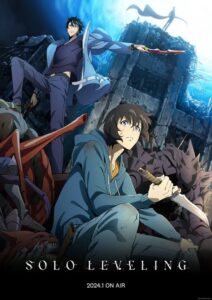
Tomb Raider King vs Solo Leveling: Which One Should You Watch?
This comparison is inevitable.
If you want the cleaner anime experience, I’d choose Solo Leveling.
Its animation is stronger, its progression is easier to follow and Sung Jinwoo’s transformation from weak hunter to overwhelming force is structured around a much simpler emotional hook.
Tomb Raider King is messier.
But it is also more strategically entertaining.
Joo-Heon’s advantage isn’t simply that he has a powerful relic. It’s that he remembers an entire future.
That means his victories often come from preparation rather than brute force.
The two protagonists also have different personalities.
Jinwoo becomes increasingly intimidating as he gains power, but Joo-Heon starts off arrogant and ruthless. He isn’t waiting to become a different person.
He’s already dangerous.
So I’d recommend:
Choose Solo Leveling if you want spectacular fights, cleaner progression and a more polished mainstream action-anime experience.
Choose Tomb Raider King if you enjoy regression stories, revenge plots, relic collecting and protagonists who exploit information rather than simply overpowering everyone.
If you liked the premise of Solo Leveling but wished the protagonist had more knowledge about the world from the beginning, Tomb Raider King is probably the more interesting experiment.
Tomb Raider King vs Other Regression Power Fantasies
The biggest difference is how aggressively the story uses foreknowledge.
Many regression stories use the second chance primarily as character development. The protagonist knows what went wrong and tries to make better decisions.
Joo-Heon has considerably less interest in becoming a better person.
His reaction is closer to:
“You already took everything from me once. I’m taking everything first this time.”
That gives Tomb Raider King a much more competitive atmosphere.
The tombs are basically resource nodes.
The relics are power-ups.
The people surrounding them are future allies, enemies or obstacles.
And Joo-Heon is playing the entire game before everyone else knows the rules.
That’s the part I think separates the show from generic regression fantasy.
Manga vs Anime: Which Version Is Better?
If you’re only interested in the anime, you can absolutely start there.
But if you want the complete Tomb Raider King story, the manhwa is the much better option because the source material is already complete.
The webtoon adaptation ran for 412 chapters, giving it vastly more material than the first anime season could possibly cover. English readers can find official releases through platforms including Tapas and Yen Press.
The anime’s first 12 episodes cover only the opening portion of that story.
That means the adaptation is an entry point, not a complete version of Joo-Heon’s journey.
There are also differences in presentation. The manhwa can spend more time showing off the elaborate relic designs and the visual scale of its world, while animation has to translate those ideas into movement and production schedules.
I’d recommend the anime first if you want to see whether the premise works for you.
If you finish Episode 12 and immediately want more, that’s the point where the manhwa becomes the obvious next step.
Where to Watch Tomb Raider King
Tomb Raider King is officially available internationally through Crunchyroll.
Crunchyroll’s original rollout covered North America, Central and South America, Europe, Africa, Oceania, the Middle East, CIS territories excluding Russia, India and Southeast Asia. The first episode launched with Japanese and Korean audio options and subtitles.
In India, current listings show the series on Crunchyroll, with Crunchyroll’s catalog also available through Amazon’s Crunchyroll channel in some markets.
The English dub was announced for Crunchyroll in July 2026, with a separate English voice cast and production team.
One useful detail for Indian viewers is that current Apple TV listings show Hindi, Tamil and Telugu audio availability alongside Korean and Japanese options, although language availability can vary by platform and region.
The first season aired weekly beginning July 8, 2026, with Episode 12 releasing September 30 after a schedule adjustment.
At the time of writing, there is no clear official announcement confirming a second season, so don’t treat platform metadata labeling the series as having multiple “seasons” as confirmation of Season 2.
The Biggest Problem With Tomb Raider King
The show’s biggest weakness isn’t simply its animation.
It’s Joo-Heon himself.
A ruthless protagonist can be incredibly entertaining, but the anime sometimes confuses arrogance with charisma.
Episode 1 is the clearest example. Joo-Heon’s behavior during the opening confrontation is supposed to establish him as someone hardened by years of tomb raiding, but some of his threats and insults make the scene feel less dangerous rather than more intimidating.
That’s a writing and direction problem, not a character problem.
A ruthless protagonist should make you think, “This guy is terrifying.”
Sometimes Tomb Raider King instead makes you think, “This guy really likes talking.”
Fortunately, the character becomes more enjoyable once the story moves beyond the initial setup and starts letting his intelligence drive the plot.
The other major weakness is that the anime’s visual production doesn’t always match the scale of the material.
The manhwa’s relics, monsters and supernatural abilities are naturally suited to impressive artwork. The anime occasionally looks like it’s working within a much tighter production budget.
That’s noticeable because the series is constantly asking you to believe that these relics are world-changing objects.
Strengths
- Joo-Heon’s future knowledge gives the power fantasy a strategic angle.
- The relic system creates more possibilities than a basic leveling mechanic.
- The protagonist is ruthless instead of conventionally heroic.
- Revenge provides a clear reason for Joo-Heon’s actions.
- The Midas auction demonstrates that the series can create tension without relying only on combat.
- The cast becomes increasingly useful as Joo-Heon’s plans expand.
- The 12-episode season moves quickly and doesn’t spend excessive time explaining basic concepts.
- The completed manhwa gives fans a huge amount of material to continue with.
Weaknesses
- The animation is inconsistent compared with the best modern manhwa adaptations.
- Joo-Heon’s arrogance occasionally becomes irritating rather than entertaining.
- Some dialogue feels written to make him sound cool instead of naturally threatening.
- The first season only covers a small portion of the larger story.
- The series introduces many relic abilities quickly, which can make the world feel mechanically dense.
- Viewers looking for deep emotional character development may find the revenge-and-power structure too straightforward.
Who Should Watch This Anime?
You should watch Tomb Raider King if your favorite part of a power fantasy is watching the protagonist exploit an unfair advantage.
It’s especially suited to viewers who enjoy:
- Solo Leveling
- regression and time-travel stories
- revenge-driven protagonists
- supernatural artifacts
- dungeon and treasure-hunting concepts
- Korean webtoon adaptations
- overpowered protagonists who actually use strategy
- fast-moving action fantasy
It’s also a good choice if you don’t need the protagonist to be morally good.
Joo-Heon’s appeal comes partly from watching him manipulate a future that everyone else thinks is still unwritten.
Who Should Skip This Anime?
Skip it if you’re primarily looking for elite animation.
If the reason you enjoyed Solo Leveling was its enormous visual spectacle, Tomb Raider King may feel like a downgrade.
I’d also skip it if you need a protagonist who is easy to root for.
Joo-Heon is selfish, manipulative and frequently unpleasant. The series wants you to enjoy watching him win, not necessarily admire the way he behaves.
And if unfinished anime stories frustrate you, remember that the 12-episode season covers only the beginning of a much larger completed manhwa.
Final Verdict
Tomb Raider King isn’t the “next Solo Leveling” in the sense that some marketing and online comparisons might suggest.
It is better described as a different version of the same power-fantasy appeal.
Where Solo Leveling asks how far a weak hunter can rise, Tomb Raider King asks what happens when an experienced survivor gets sent back to the beginning with the entire future memorized.
That distinction is enough to make Joo-Heon’s journey worth following.
The anime isn’t flawless. The production can look underpowered, the protagonist’s attitude occasionally crosses from entertaining into irritating, and the first season ends before the story has reached the material that made the manhwa such a long-running success.
But the core idea works.
Watching Joo-Heon steal relics before their future owners even know they exist is satisfying precisely because you understand the unfairness of his advantage.
My verdict: 8.9/10.
If you like Solo Leveling, regression fantasy or ruthless protagonists, Tomb Raider King deserves a few episodes before you decide whether its style works for you.
If you want the full story, though, the manhwa is where the real marathon begins.