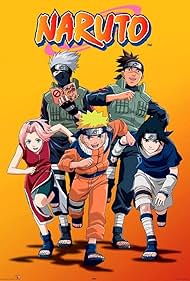
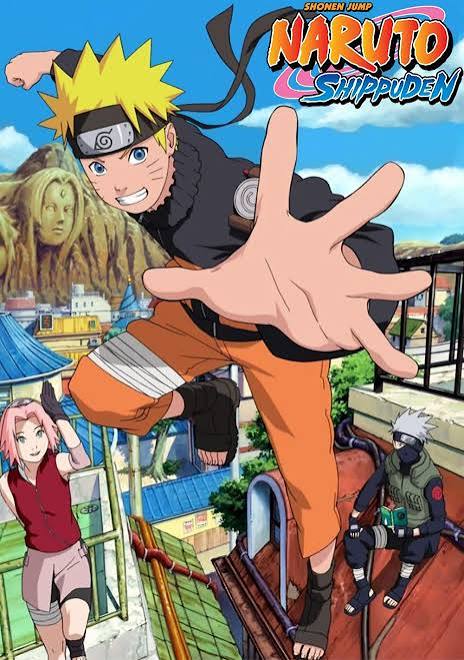
Naruto: Shippuden
Naruto: Shippuden is at its best when it remembers that Naruto Uzumaki’s biggest battles were never really about becoming the strongest ninja.
The series begins with Naruto returning to the Hidden Leaf Village after two and a half years of training. He is older, stronger and more confident, but the problems waiting for him are far more complicated than anything he faced as a child. Gaara is now the Kazekage. The Akatsuki has started actively hunting the jinchuriki. Sasuke has gone further down his own path, and Naruto is increasingly forced to confront the fact that saving a friend may be much harder than defeating an enemy.
That is what makes Shippuden worth discussing even after all these years. It has some of the strongest character payoffs in long-running anime, but it also has a very real pacing problem that can make the journey feel much longer than it needs to be.
Overview
Naruto: Shippuden picks up after Naruto’s extended training journey with Jiraiya and moves the story into a much larger phase of the shinobi world.
The premise is still recognizable: Naruto wants to protect his friends, become Hokage and earn the respect he was denied as a child. What changes is the scale of the consequences.
The Akatsuki is no longer simply a mysterious group of dangerous rogue ninja. Its members become individual ideological opponents, each representing a different way of looking at violence, loyalty, revenge or peace.
Sasuke’s storyline develops in parallel, eventually becoming inseparable from the larger conflict. Meanwhile, Naruto’s relationship with the Nine-Tails changes from a source of uncontrolled power into one of the most important relationships in the entire series.
Shippuden therefore feels less like a straightforward sequel and more like the point where Naruto’s childhood story grows into a story about the shinobi world’s history and the consequences of that history.
Studio Pierrot’s official archive lists the series as running from February 2007 to March 2017, with 500 episodes.
Story Summary — Spoiler-Free
The opening section of Shippuden immediately demonstrates how much the characters have changed.
Naruto and Sakura reunite with Kakashi, but their first major mission involves rescuing Gaara, who is now responsible for an entire village rather than simply being the isolated child introduced in the original series.
That difference matters. Shippuden constantly takes ideas that were introduced when these characters were children and asks what happens when they become adults with responsibilities.
The story moves through several types of conflict. Some arcs are built around hunting members of the Akatsuki. Others focus on Naruto’s attempt to reach Sasuke. Several explore the histories of individual villages and clans. Eventually, the narrative expands into a massive war involving much of the shinobi world.
The tone changes along the way.
There is still comedy, particularly around Naruto and the supporting cast, but the series spends considerably more time dealing with death, grief, revenge, political manipulation and the consequences of previous generations.
The pacing is the biggest obstacle. The main story has stretches of excellent momentum, followed by anime-original material, flashbacks or side stories that can interrupt that momentum.
For a first-time viewer, Shippuden makes much more sense as a series to watch with a reliable filler guide rather than something that has to be consumed blindly from episode 1 through episode 500.
Main Characters
Naruto Uzumaki
Naruto’s biggest change is not his power level. It is his understanding of what strength is supposed to accomplish.
Early Naruto wanted recognition because nobody seemed willing to give it to him. Shippuden gradually turns that desire outward. He becomes increasingly concerned with protecting people who may not even like him.
The Pain arc is the clearest example. Naruto’s eventual response to Nagato is important because he does not simply defeat an enemy and move on. He tries to understand the chain of suffering that created him.
His relationship with Kurama also develops far beyond the familiar “boy with a demon inside him” premise. Learning to cooperate with the Nine-Tails becomes part of Naruto’s larger journey toward understanding people who were previously treated as monsters.
Sasuke Uchiha
Sasuke is arguably the character who gives Shippuden its longest-running sense of tension.
His objective changes as new information about his family and village comes to light. Revenge initially appears straightforward, but every revelation complicates the question of who Sasuke should actually blame.
That makes his conflict with Naruto more interesting than a standard rivalry. Naruto wants to save Sasuke because he sees him as a friend. Sasuke increasingly sees that attachment as something preventing him from following his chosen path.
The two characters therefore want completely different things from their relationship.
Sakura Haruno
Sakura’s strongest development comes from the fact that Shippuden finally allows her training to have visible consequences.
Under Tsunade, she becomes a capable medical ninja while also developing extraordinary physical strength.
Her fight against Sasori is the obvious showcase. She is not simply standing beside Naruto and Sasuke while they fight the important enemy. She is directly responsible for solving the battle’s problems and survives partly because she has developed the knowledge required to understand Sasori’s puppets and poison.
The frustration is that the series does not consistently give Sakura this level of importance afterward.
Kakashi Hatake
Kakashi initially appears to be the same relaxed teacher viewers remember from the original Naruto.
Shippuden gradually reveals how much of that personality is built around loss.
His history with Obito becomes especially important. The later confrontation between the two is one of the series’ best examples of a fight being used to tell a character story.
The battle works because their movements, abilities and memories are tied to the same childhood history. It is not simply two powerful characters exchanging techniques.
Jiraiya
Jiraiya is one of the most effective examples of Shippuden turning a comedic character into a serious dramatic figure without completely abandoning his personality.
He remains eccentric, but his understanding of the shinobi world becomes increasingly important.
His investigation in the Rain Village is where the series finally gives the character the kind of responsibility his position as Naruto’s mentor suggests.
The emotional power of his later storyline comes partly from the contrast with the ridiculous version of Jiraiya viewers had spent so much time watching.
Itachi Uchiha
Itachi is one of Shippuden’s most deliberately recontextualized characters.
The early story presents him primarily through Sasuke’s hatred. Later information forces the audience to reconsider what they thought they understood about him.
What works particularly well is that the revelations do not merely provide new information. They alter the interpretation of earlier scenes.
Itachi therefore becomes an excellent example of Shippuden’s long-term storytelling: something you thought you understood hundreds of episodes earlier can acquire a completely different meaning later.
Why You Should Watch Naruto: Shippuden
The strongest reason to watch Shippuden is payoff.
The series has enough time to let relationships develop slowly, disappear into the background and return with greater importance.
The Akatsuki is a particularly strong example. Members such as Deidara, Sasori, Kakuzu, Hidan, Pain and Itachi do not simply feel like interchangeable villains waiting for Naruto to defeat them.
Their conflicts expose different parts of the shinobi world.
The Shikamaru-centered material following Asuma’s death is another example. The emotional impact works because Shikamaru was established years earlier as someone who preferred avoiding unnecessary effort and responsibility. Watching him deal with grief and responsibility therefore feels like genuine progression rather than a personality swap.
The same principle applies to Naruto’s confrontation with Pain and the long-running Naruto-Sasuke relationship.
Shippuden’s best moments are rarely great simply because a character wins.
They are great because the victory means something.
Animation & Art Style
Naruto: Shippuden is a strange case visually because its best animation is excellent while its average animation is much more ordinary.
Studio Pierrot was producing a long-running weekly series, so visual consistency was never guaranteed.
The Pain assault on the Hidden Leaf is the most famous example of the production team deliberately changing the visual energy of the series. Characters move with exaggerated elasticity, perspective shifts aggressively and attacks feel less rigid than in many standard television episodes.
Some viewers love that approach. Others dislike how different it looks from the series’ normal character designs.
I think it works because the arc itself is supposed to feel like the rules of Naruto’s world have suddenly been disrupted.
The later Naruto and Sasuke battle also receives considerably more visual attention than an ordinary episode.
The problem is that viewers cannot expect those highs throughout the entire 500-episode run. There are plenty of episodes where the animation is perfectly serviceable but hardly memorable.
Shippuden is therefore a series where individual animation highlights are worth seeking out rather than a show that should be sold on consistent visual quality.
Music & Voice Acting
The soundtrack is one of Shippuden’s most dependable elements.
Yasuharu Takanashi’s score gives the series a larger musical identity while still leaving room for quieter character scenes.
Music becomes especially effective during the emotional arcs because Shippuden often allows a scene to sit with grief instead of immediately cutting to another action sequence.
Junko Takeuchi’s performance as Naruto is equally important. Naruto remains energetic and loud, but Takeuchi gradually gives the character more emotional weight as his responsibilities increase.
Noriaki Sugiyama’s Sasuke works through almost the opposite approach. Sasuke frequently suppresses what he is feeling, so the performance depends heavily on tone and restraint.
The Japanese version is available on Crunchyroll with Japanese audio and multiple subtitle options, including English and several European and Middle Eastern languages.
Where to Watch Naruto: Shippuden Around the World
Streaming availability is one area where old Naruto articles become unreliable quickly because the catalog is different from country to country.
In the United States, Naruto: Shippuden is currently available on Crunchyroll and Hulu, with digital purchase options also listed through Apple TV and Fandango at Home.
In the United Kingdom, the series is currently listed on Crunchyroll and Disney+, while BBC iPlayer also carries it.
Australia currently has the series on Crunchyroll, including through Crunchyroll Amazon Channel.
India has one of the more interesting current setups. Naruto: Shippuden is listed on Crunchyroll, Netflix and SonyLIV, with Crunchyroll Amazon Channel also appearing in current streaming listings.
The important point is that there is no single global streaming home for Shippuden.
Crunchyroll is the most consistent international option, but the exact catalog, audio tracks and subtitle selection depend on the country.
There is also no normal simulcast schedule to worry about. Shippuden finished its original Japanese television run in March 2017, so episodes are available as a completed library rather than being released weekly as a current anime.
For Indian viewers specifically, Crunchyroll began rolling out Hindi, Tamil and Telugu versions in July 2026. The rollout is happening in batches, with the first 220 episodes scheduled for regional-language releases through September 2026.
That makes the Indian version particularly useful for viewers who grew up watching Naruto through television dubs and want to continue Shippuden in a familiar language.
Naruto: Shippuden vs. One Piece vs. Bleach
If you are deciding between the three major long-running shonen series, I would not recommend choosing based on reputation.
Choose based on what you want the journey to emphasize.
Naruto: Shippuden is the strongest choice for character rivalry.
Naruto and Sasuke provide a central relationship that continues evolving even when the story becomes enormous. Their conflict is personal, ideological and eventually tied to the history of the shinobi world.
One Piece is the better choice for world-building.
Its world feels enormous without being entirely dependent on one rivalry. Islands, cultures, governments, historical mysteries and political conflicts continually expand the setting.
Bleach is the better choice for a viewer who prioritizes style and supernatural combat.
Its character designs, sword-based battles and supernatural atmosphere give it a different identity from Naruto.
If I had to choose only one for someone who wants emotional character progression, I would pick Naruto.
If the priority is exploration and world-building, I would choose One Piece.
If the priority is style and combat atmosphere, I would choose Bleach.
The important distinction is that Naruto’s biggest advantage is not that it has the strongest individual fight. It is how much meaning certain fights acquire because of everything that happened before them.
Manga vs. Anime: Which Version Is Better?
For the main story, the manga is the more efficient version.
Masashi Kishimoto’s manga does not have to stop the narrative for television scheduling, anime-original arcs or extended flashbacks. The progression is therefore considerably tighter.
The anime’s advantage is presentation.
A manga panel cannot reproduce the effect of Naruto’s voice breaking during an emotional scene, the sound design of a major attack or the music that accompanies a character’s final moments.
This becomes particularly noticeable in the series’ major confrontations.
The anime also occasionally expands material into scenes that benefit from movement. A well-animated fight can turn a sequence that was already effective on paper into something much more memorable.
My recommendation for manga readers is therefore straightforward: if you want the cleanest story, read the manga. If you want the complete audiovisual experience, watch the anime while using a filler guide.
For someone new to Naruto, I would start with the anime unless they already know they prefer manga.
The Filler Problem Is Bigger Than Most Recommendations Admit
The phrase “Naruto has filler” does not fully explain the problem.
The issue is where some of the anime-original material appears.
A filler story that appears between major arcs is easy enough to skip. The more frustrating situation occurs when the main narrative has reached a dramatic point and the anime suddenly shifts backward or sideways.
That can destroy momentum.
Shippuden has around 200 episodes commonly classified as filler, although exact totals vary depending on whether mixed canon/filler episodes are counted. The widely used Anime Filler List classification marks 203 episodes as filler.
For a first-time viewer, I strongly recommend using a filler guide.
But I would not automatically call every filler episode bad.
Some anime-original stories give secondary characters additional time that the manga never provided. The problem is not that every non-manga episode has zero value.
The problem is that a viewer who is interested primarily in Naruto’s central story does not need to watch every one of them.
There is a big difference between choosing to watch filler because you like the characters and believing filler is mandatory homework.
It isn’t.
Strengths
Shippuden’s greatest strength is long-term character payoff.
It remembers relationships that were established years earlier and gives them new context.
The Akatsuki is another major strength because its members often feel like characters with their own histories rather than obstacles designed solely to test Naruto.
The series also understands the value of emotional consequences. Asuma’s death changes Shikamaru. Jiraiya’s death affects Naruto’s understanding of the world. Itachi’s story changes Sasuke’s perception of his own past.
The strongest parts of Shippuden reward patience.
You can often see why a scene matters only after remembering something that happened hundreds of episodes earlier.
Weaknesses
The pacing is Shippuden’s biggest problem, and it goes beyond ordinary “slow anime” criticism.
The series sometimes stretches individual moments by repeatedly showing flashbacks that the audience has already seen.
The Fourth Shinobi World War is where this becomes particularly noticeable. The storyline contains major revelations, important character reunions and some spectacular battles, but its momentum is repeatedly interrupted.
The supporting cast also suffers.
The original Naruto series spent significant time establishing characters such as Neji, Rock Lee, Kiba, Shino, Tenten and others. Shippuden occasionally brings them back, but many no longer receive the same narrative attention.
That is one of the biggest missed opportunities in the sequel.
Shippuden’s world gets larger while its effective central cast becomes smaller.
Who Should Watch This Anime?
Watch Naruto: Shippuden if you enjoy long-form character development and do not mind investing hundreds of episodes in a single story.
It is particularly rewarding if you already watched the original Naruto and care about Naruto and Sasuke’s relationship.
It also suits viewers who enjoy villains with recognizable philosophies rather than straightforward evil motivations.
If you like stories where small details from earlier arcs eventually become important, Shippuden has plenty to offer.
Just go in knowing that you are committing to a very long series, not a tightly edited modern seasonal anime.
Who Should Skip This Anime?
Skip Shippuden if you need every episode to move the main story forward.
You should also avoid it if long flashbacks, anime-original stories and large casts frustrate you.
If you mainly want modern, consistently high-end animation, there are better choices.
And if you are looking for a short introduction to shonen anime, starting with a 500-episode sequel is probably not the sensible route.
Shippuden rewards patience. It does not reward impatience.
Final Verdict
Naruto: Shippuden is worth watching, but I would never recommend watching it without a plan.
The series has too much filler and too many pacing interruptions for the “watch all 500 episodes in order no matter what” approach to make sense.
The reward for navigating that problem is substantial.
The Pain storyline demonstrates how Naruto’s childhood experiences shape his understanding of revenge. Sasuke’s story turns a simple revenge plot into a much more complicated argument about truth and responsibility. Kakashi and Obito show how the same childhood trauma can send two people in radically different directions. Itachi’s story demonstrates how easily a character’s entire history can be reinterpreted.
And then there is Naruto himself.
His journey from an isolated child desperate for acknowledgment to someone trying to understand people who have hurt him is the reason the series has remained relevant long after its original broadcast.
Studio Pierrot confirms that Shippuden concluded in March 2017 after 500 episodes.
So, is Naruto: Shippuden still worth watching?
Yes — especially if you watch the canon story intelligently instead of treating every episode as mandatory.
It is too long, sometimes frustrating and occasionally uneven.
It is also capable of delivering character payoffs that shorter anime simply cannot reproduce because they have not had the time to build the same history.