Bleach
Introduction
There is a particular moment in Bleach that explains why the series became much bigger than its initial premise. Ichigo Kurosaki starts out as a teenager who can see ghosts, but the series gradually turns that simple supernatural setup into a story involving Soul Reapers, Hollows, Quincy, ancient grudges, family secrets, and several competing ideas about what it means to protect someone.
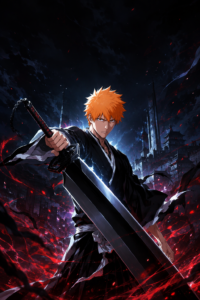
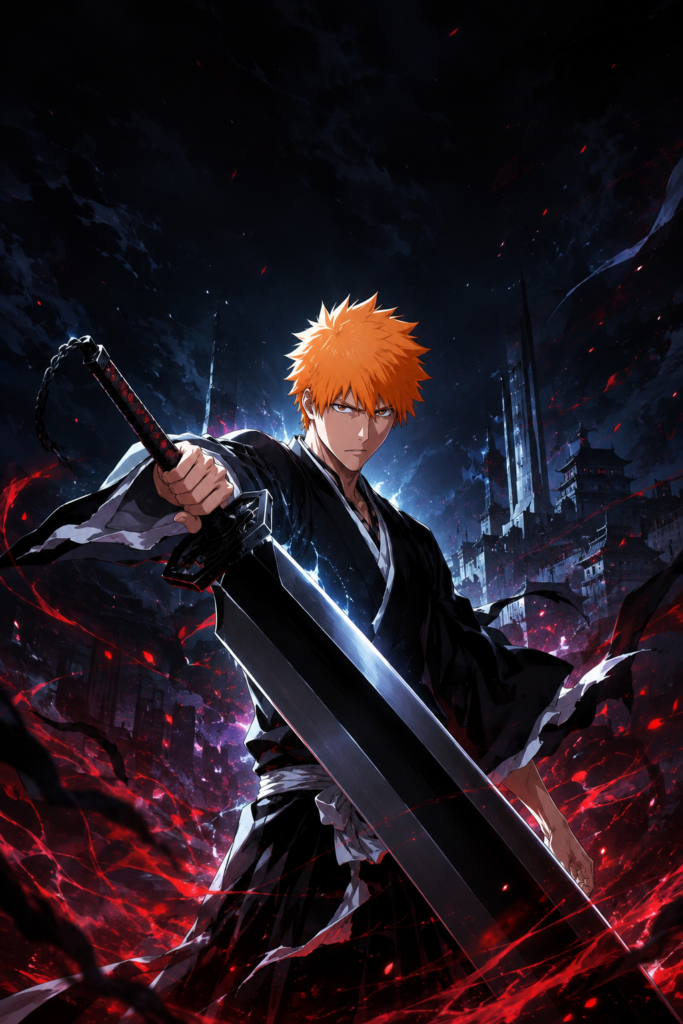
What makes Bleach unusual among long-running shonen anime is how strongly its identity comes from atmosphere. The black robes, enormous swords, empty streets, moonlit Soul Society, character entrances, and music often do as much work as the plot.
The original television anime ran from October 2004 to March 2012 and reached 366 episodes before returning with Thousand-Year Blood War. The official anime site confirms that the original series was produced by Studio Pierrot and that the franchise has four theatrical films.
The real question, though, is not whether Bleach is historically important. It is whether the experience of watching it today is still worth the time.
My answer is yes — but only if you watch it intelligently.
Overview
Bleach begins with Ichigo Kurosaki, a teenager who has always been able to see spirits. His ordinary life changes when he encounters Rukia Kuchiki, a Soul Reaper responsible for protecting humans from dangerous spirits called Hollows.
After Rukia is injured while protecting Ichigo’s family, she transfers her Soul Reaper abilities to him. Ichigo is suddenly responsible for dealing with supernatural threats that most people cannot even see.
That premise could have produced a fairly conventional monster-of-the-week series. Instead, Bleach expands its world dramatically.
The Soul Society becomes one of the show’s defining ideas: a functioning supernatural society with its own military structure, traditions, divisions and political conflicts. Characters who initially appear to be simple allies or enemies can become considerably more complicated once their personal loyalties are exposed.
The biggest strength of the premise is that Ichigo is not particularly interested in becoming a hero. He protects people because he cannot stand watching someone in front of him get hurt. That motivation remains more important to his character than any grand ambition.
Story Summary — Spoiler-Free
The early part of Bleach is relatively grounded. Ichigo learns how to perform Soul Reaper duties while trying to maintain his normal school life. The contrast between ordinary Karakura Town and the supernatural world gives the series a distinctive rhythm.
Then the scale changes.
The Soul Society storyline transforms Bleach from a supernatural action series into a much larger conflict. Ichigo and his friends enter a world governed by Soul Reapers, where the rules are not necessarily as straightforward as they first appear.
From there, the series introduces increasingly complicated factions and abilities. Hollows evolve into more dangerous forms, Soul Reapers reveal their Zanpakuto abilities, and Ichigo’s own powers become increasingly difficult to understand.
The story eventually moves through several major phases, including the Arrancar conflict, Hueco Mundo, the battle against Sōsuke Aizen, and the Fullbring storyline.
The important thing to understand before starting is that Bleach does not maintain the same pacing throughout its entire run.
Some stretches move quickly because major character confrontations are happening almost every episode. Other stretches slow down considerably, particularly when anime-original material interrupts the manga storyline.
That is the biggest difference between watching Bleach casually and watching it with a filler-aware viewing strategy.
Main Characters
Ichigo Kurosaki
Ichigo is one of the better examples of a shonen protagonist whose personality is more defensive than ambitious.
He does not begin the story dreaming about becoming the strongest Soul Reaper. His motivation is much smaller: he wants to protect the people around him.
That becomes especially interesting as his enemies become stronger. Every new transformation solves an immediate problem while creating another question about where his power actually comes from.
The battle against Byakuya in the Soul Society arc is an early example of this progression. Ichigo’s determination matters as much as the new abilities he develops.
Rukia Kuchiki
Rukia is effectively the doorway into the entire Soul Reaper world, but reducing her to the role of Ichigo’s supernatural guide misses why she works.
Her relationship with her adoptive brother Byakuya gives the Soul Society arc much of its emotional weight. The conflict surrounding her is not simply about whether Ichigo can rescue a friend. It forces Rukia to confront her own acceptance of the consequences surrounding her life.
Her early relationship with Ichigo also gives the series some of its best comedy. She can be serious about supernatural bureaucracy one moment and completely incapable of drawing a convincing explanation the next.
Uryu Ishida
Uryu initially appears to be Ichigo’s rival, but his identity as a Quincy gives him a different relationship with the Hollow world.
His pride is particularly important. Uryu’s choices are often shaped by his desire to prove that Quincy abilities deserve respect, rather than being treated as an obsolete enemy tradition.
His rivalry with Ichigo works because the two characters are fundamentally different while still sharing the same instinct to protect others.
Orihime Inoue
Orihime is frequently underestimated because her personality is comedic and gentle during the early episodes.
Her powers, however, are conceptually unusual. Rather than simply increasing destructive force, her abilities revolve around rejecting phenomena.
Her emotional storyline becomes particularly significant during the Arrancar portion of the series, where her desire to protect others conflicts with the limitations imposed on her.
Byakuya Kuchiki
Byakuya initially looks like the archetypal emotionless noble.
The interesting part is watching the series gradually explain why his behavior is so rigid.
His confrontation with Ichigo works because it is not merely a contest between two swordsmen. It is a clash between Byakuya’s understanding of duty and Ichigo’s refusal to accept that institutional rules automatically make something morally correct.
Kisuke Urahara
Urahara is one of Bleach‘s most effective mystery characters.
His cheerful shopkeeper personality makes him seem harmless, but the series continually hints that there is far more behind his behavior.
He is particularly useful to the story because he represents knowledge without straightforward morality. Urahara frequently knows more than he tells Ichigo, which makes even his helpful moments feel slightly suspicious.
Why You Should Watch Bleach
The Soul Society arc is the clearest reason to start.
The rescue mission gives almost every major character a personal reason to participate, while the Soul Reaper hierarchy creates natural conflicts between Ichigo’s group and the people standing in their way.
The Ichigo vs. Byakuya fight is particularly important because the battle communicates character philosophy through swordplay. Ichigo is not simply trying to overpower Byakuya; he is rejecting the idea that Rukia’s fate should be accepted simply because the institution has declared it.
Later, the series becomes much more interested in identity.
Ichigo’s struggle with his Hollow side is not just a new-power storyline. It is connected to his fear of losing control and becoming something he cannot accept.
That is where Bleach is at its best: when its supernatural mechanics reflect the characters’ personal conflicts.
Animation & Art Style
Studio Pierrot’s Bleach has an unmistakable visual identity.
The Soul Reaper uniforms create an immediately recognizable silhouette, while Zanpakuto releases give the action scenes a strong visual hierarchy. A character can often be identified simply by the shape and behavior of their weapon.
The series also makes unusually effective use of empty space. Karakura Town can feel almost deliberately quiet, while Soul Society has a more traditional architectural atmosphere.
Not every episode looks equally strong. A weekly production schedule eventually shows itself, particularly during longer battles and filler material. Some episodes rely heavily on repeated shots, limited movement and dramatic still frames.
But the strongest episodes understand that animation does not always require constant movement.
Ichigo’s first major Bankai reveal is memorable partly because of presentation rather than animation complexity. The transformation, soundtrack, framing and sudden change in fighting style all work together.
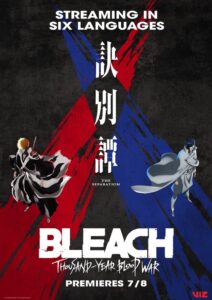
The later Thousand-Year Blood War adaptation is a different visual experience. The official production again involves Studio Pierrot, with Tomohisa Taguchi directing and Shiro Sagisu returning for the music.
Music & Voice Acting
Shiro Sagisu’s music is one of the easiest ways to recognize Bleach without seeing the screen.
Tracks such as “Number One” became closely associated with Ichigo’s major moments, while the soundtrack also makes extensive use of orchestral, choral and electronic elements.
The music often gives relatively simple action scenes more personality than the animation alone could provide.
The Japanese cast is led by Masakazu Morita as Ichigo, Fumiko Orikasa as Rukia and Yuki Matsuoka as Orihime. The English dub features Johnny Yong Bosch as Ichigo, Michelle Ruff as Rukia and Stephanie Sheh as Orihime.
Bosch’s performance is especially effective once Ichigo becomes more emotionally strained. His performance grows rougher as Ichigo’s responsibilities become heavier, rather than keeping the same energetic delivery throughout the series.
Where to Watch Bleach in 2026
This is one area where older Bleach guides become unreliable because streaming rights differ significantly by country.
In India, current listings show the original Bleach available through Netflix, Crunchyroll and SonyLIV, with additional availability through Crunchyroll’s Amazon channel. Some episodes or seasons may have different language and subscription availability, so checking the individual season listing before subscribing is sensible.
The situation is different in the United States. Current listings show the original series streaming on Hulu, while the Thousand-Year Blood War continuation is also available through Hulu.
Internationally, Thousand-Year Blood War has a particularly important Disney+ connection. VIZ confirms that the current final installment, The Calamity, streams exclusively on Hulu in the United States and Disney+ in select international markets.
For viewers in India, current listings for Thousand-Year Blood War show availability through Netflix and JioHotstar, among other services.
The original series is not a simulcast-era show, of course. It originally aired weekly from 2004 to 2012. The current Thousand-Year Blood War project follows a modern weekly release model, with the final cour beginning July 25, 2026 in Japan.
Bleach vs. Naruto and One Piece: Which Should You Choose?
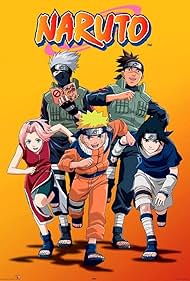
If you’re deciding between the three major long-running shonen series, I would not recommend choosing Bleach simply because you want another Naruto.
Bleach is more style-conscious and often more interested in character design, atmosphere and individual confrontations than in maintaining a single giant adventure structure.
Naruto has a stronger emphasis on its protagonist’s personal journey from outsider to leader. Its emotional storytelling is often more direct.
One Piece is much more committed to world exploration and long-term mystery. If discovering new islands, cultures and political systems is your favorite part of anime, One Piece is the stronger choice.
Bleach wins if you want stylish supernatural combat, memorable character entrances, sword-based power systems and a cast where even secondary characters can have unusually distinctive designs.
There is also a practical difference.
Bleach is easier to turn into a manageable project if you use a filler guide. Watching every episode blindly is not the best way to experience the original television run.
The Manga vs. Anime Question
If you are deciding between the manga and anime, I would recommend the anime for a first-time viewer who enjoys voice acting and music, but I would strongly recommend the manga to readers who become frustrated by pacing.
The original anime contains substantial anime-original material. The Bount storyline is the most obvious example: it was created outside the manga’s main storyline and occupies a significant stretch of the television adaptation.
There are also shorter filler blocks and episodes inserted into otherwise ongoing storylines. Some anime-original additions are harmless or entertaining; others interrupt momentum at exactly the wrong moment.
This becomes particularly noticeable during the Arrancar era.
The manga generally gives Kubo’s artwork a cleaner, more immediate presentation. The anime adds music, voice performances and expanded fight sequences, but sometimes stretches material that works better on the page.
For that reason, manga readers should not assume the anime is simply a perfect moving version of the source.
It isn’t.
The adaptation has its own strengths, but its pacing problems are real.
Strengths
Bleach has an unusually strong visual identity.
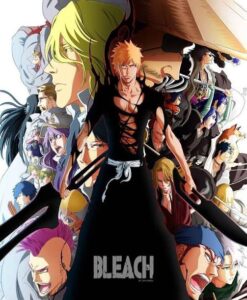
Its character designs remain recognizable even when the cast becomes enormous, and Zanpakuto abilities give battles a sense of personality beyond simple power scaling.
The Soul Society setting is another major strength. Instead of presenting Soul Reapers as mysterious warriors who exist only to fight, the series creates an institution with rules, ranks and conflicting loyalties.
The soundtrack is also a genuine advantage rather than background decoration.
Most importantly, the series understands the value of a memorable entrance. A character revealing Bankai, stepping into a battlefield or simply changing the tone of a conversation can become an event.
Weaknesses
The biggest problem is not simply “slow pacing.”
The deeper issue is that Bleach sometimes destroys its own momentum.
A major conflict can reach a critical point, only for the anime to insert unrelated material or an extended sequence that makes the viewer wait for the story they actually started watching.
The Bount material is the clearest example, but smaller interruptions occur elsewhere too.
There is another problem: the enormous supporting cast creates uneven character investment. Bleach introduces characters with excellent designs and interesting abilities, but it cannot give all of them meaningful development.
Some characters remain memorable because they look fantastic or have one exceptional fight rather than because the narrative consistently develops them.
That distinction matters when approaching the series with modern expectations.
Who Should Watch This Anime?
Watch Bleach if you enjoy:
- Supernatural battle systems
- Sword fights and transformation-based abilities
- Large ensemble casts
- Stylish character designs
- Darker shonen themes
- Strong anime soundtracks
- Long-form rivalries
- Stories where organizations and factions matter
It is particularly suitable for viewers who enjoy the atmosphere of Jujutsu Kaisen but want a much larger, older series with a stronger emphasis on sword combat and supernatural societies.
If you enjoy character aesthetics as much as plot mechanics, Bleach becomes even easier to appreciate.
Who Should Skip This Anime?
Skip the original television run if you strongly dislike filler or expect every episode to advance the central story.
You should also reconsider it if you want a tightly paced modern anime where every episode is essential. Bleach was produced as a long-running weekly adaptation, and its structure reflects that era.
If you have very little patience for older animation, the early episodes may also feel dated compared with contemporary productions.
In that situation, the manga is a better starting point.
Final Verdict
Bleach is still worth watching, but I would not recommend watching it the way viewers did when it originally aired: one episode after another without knowing where the anime-original material begins.
The series’ best material is genuinely excellent.
The Soul Society arc remains one of the strongest large-scale rescue stories in shonen anime. Ichigo’s development, Rukia’s conflict, Byakuya’s rigid sense of duty and the eventual revelations surrounding the Soul Reapers give that section far more substance than its sword fights initially suggest.
The Arrancar material is more uneven, but it contains some of the franchise’s most memorable battles and character moments. The Fullbring storyline is smaller and often overlooked, yet its more personal approach makes it a useful contrast to the enormous conflicts surrounding it.
And then there is the soundtrack.
Very few anime have a musical identity as immediately recognizable as Bleach.
My recommendation is simple: start it, give the Substitute Soul Reaper and Soul Society material a fair chance, and use a filler guide once the long-running structure starts interfering with the main story.
If you want tightly controlled pacing, read the manga.
If you want iconic fights, music, voices, transformations and atmosphere, watch the anime.
For a viewer willing to accept its flaws, Bleach remains one of the defining long-form shonen anime experiences.