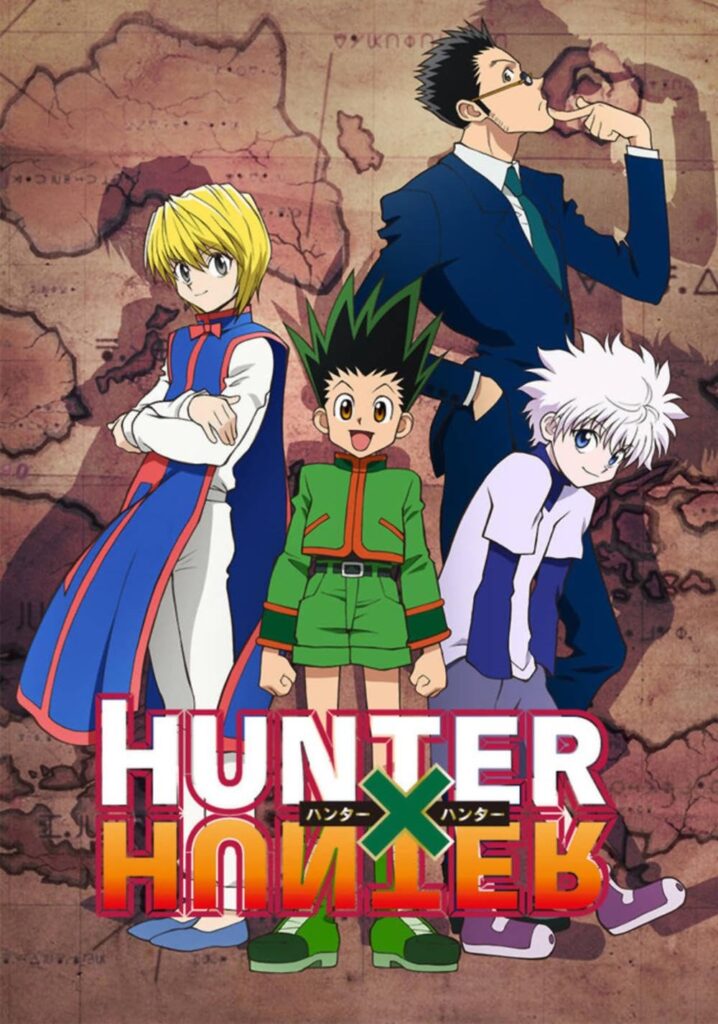
Hunter x Hunter (2011)
Introduction
Hunter × Hunter (2011) is widely regarded as one of the greatest shonen anime ever created. Based on Yoshihiro Togashi’s acclaimed manga, the series combines action, adventure, fantasy, and psychological storytelling to create an unforgettable experience. Unlike many traditional battle anime, Hunter × Hunter focuses on intelligent strategy, complex character development, and a richly detailed world where every challenge requires more than raw strength.
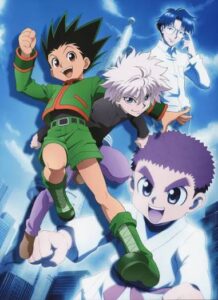
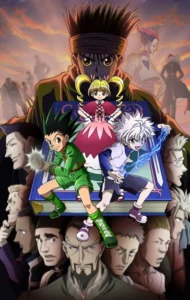
Produced by Madhouse, the 2011 adaptation faithfully follows the manga from the beginning through the 13th Hunter Chairman Election Arc, delivering 148 episodes of consistently high-quality animation and storytelling. The series follows Gon Freecss, a cheerful and determined young boy who dreams of becoming a Hunter to discover why his father, Ging Freecss, chose the dangerous life of a Hunter over raising his own son.
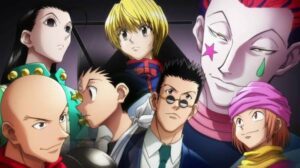
During his journey, Gon forms lasting friendships with Killua Zoldyck, Kurapika, and Leorio Paradinight. Together, they face deadly examinations, dangerous criminals, powerful Hunters, and extraordinary creatures while growing stronger both physically and emotionally.
What makes Hunter × Hunter (2011) stand out is its willingness to challenge expectations. Characters constantly evolve, battles emphasize intelligence over brute force, and even villains are written with remarkable depth. Combined with its innovative Nen power system and unforgettable story arcs like Yorknew City and Chimera Ant, the anime has earned a lasting reputation as one of the finest works in the shonen genre.
Whether you’re new to anime or a longtime fan, Hunter × Hunter (2011) offers an exciting and emotionally rewarding adventure that remains highly recommended years after its original broadcast.
Hunter × Hunter (2011) Overview
The world of Hunter × Hunter is filled with hidden treasures, mysterious creatures, dangerous criminals, and unexplored lands. Those brave enough to pursue these challenges can become licensed Hunters—elite individuals recognized for their exceptional skills and granted access to opportunities unavailable to ordinary people.
Inspired by the stories of his absent father, Gon Freecss leaves his peaceful home on Whale Island to take the challenging Hunter Examination. Along the way, he meets Killua, Kurapika, and Leorio, each pursuing the Hunter license for deeply personal reasons.
As their journey progresses, the group encounters increasingly dangerous enemies while exploring new regions of the world. Every story arc introduces unique challenges that test not only their strength but also their intelligence, morality, and determination.
Unlike many long-running action anime, Hunter × Hunter constantly reinvents itself. Each arc features different themes, settings, and storytelling styles, ensuring the series remains fresh from beginning to end.
Anime Highlights
- Faithful adaptation of Yoshihiro Togashi’s manga.
- Produced by the acclaimed animation studio Madhouse.
- Features the unique and highly praised Nen power system.
- Memorable protagonists and morally complex villains.
- Exceptional world-building with diverse locations.
- Strategic battles that reward intelligence and planning.
- Widely considered one of the greatest shonen anime ever made.
Story Summary (Spoiler-Free)
Gon Freecss grows up believing his parents are gone until he learns that his father, Ging Freecss, is alive and working as one of the world’s greatest Hunters. Determined to understand why Ging chose adventure over family, Gon sets out to earn his own Hunter License.
During the demanding Hunter Examination, Gon befriends Killua Zoldyck, a talented boy from a legendary family of assassins. They are joined by Kurapika, who seeks justice for his massacred clan, and Leorio Paradinight, whose dream is to become a doctor capable of helping those in need.
After passing the examination, the four friends begin exploring a vast world filled with dangerous organizations, mysterious abilities, and increasingly powerful opponents.
Their journey takes them from martial arts arenas to criminal underworlds, magical video games, and battles against terrifying new species that threaten humanity itself.
Each adventure challenges the characters in different ways, forcing them to develop new skills while confronting difficult moral decisions.
Rather than relying solely on action, Hunter × Hunter balances exciting battles with emotional storytelling, clever strategy, humor, and meaningful character development.
The result is a series that continually surprises viewers while maintaining strong emotional connections to its characters.
Main Characters
Gon Freecss
Gon Freecss is the heart of Hunter × Hunter.
Cheerful, optimistic, and endlessly curious, Gon possesses extraordinary natural talent and an unwavering determination to achieve his goals. His greatest motivation is finding his father and understanding the life of a Hunter.
Despite his friendly personality, Gon demonstrates remarkable courage and refuses to give up even in the face of overwhelming danger. Throughout the series, he matures significantly as he experiences both triumph and hardship.
Killua Zoldyck
Killua Zoldyck quickly becomes Gon’s closest friend.
Raised within the infamous Zoldyck family of assassins, Killua possesses incredible combat skills despite his young age. However, he longs for freedom and a normal life beyond the expectations placed upon him.
His intelligence, speed, and mastery of Nen make him one of the series’ strongest young characters.
Killua’s friendship with Gon forms the emotional foundation of much of Hunter × Hunter’s story.
Kurapika
Kurapika is the last surviving member of the Kurta Clan.
After his people were massacred for their rare Scarlet Eyes, he dedicates his life to finding the Phantom Troupe and recovering the stolen eyes of his fallen clan.
Calm, intelligent, and highly disciplined, Kurapika becomes one of the series’ most compelling characters through his struggle between justice and revenge.
Leorio Paradinight
Although initially appearing comic and hot-tempered, Leorio possesses a genuinely compassionate heart.
His goal of becoming a doctor stems from his desire to provide medical care regardless of a person’s financial situation.
As the story progresses, Leorio proves himself to be a loyal friend whose courage often shines during critical moments.
Supporting Characters
Hisoka Morow
One of the most unpredictable characters in the series, Hisoka is a powerful fighter who constantly seeks strong opponents.
His mysterious personality and unique motivations make him both an ally and a dangerous enemy depending on the situation.
Isaac Netero
The Chairman of the Hunter Association, Isaac Netero is respected as one of the world’s greatest Hunters.
Despite his cheerful personality, he possesses extraordinary strength, wisdom, and decades of experience.
His leadership becomes increasingly important as the series progresses.
Ging Freecss
Ging Freecss is Gon’s father and one of the most accomplished Hunters in history.
Although he remains absent for much of the story, his influence drives Gon’s journey and inspires many of the adventures throughout the series.
His mysterious personality makes him one of Hunter × Hunter’s most intriguing figures.
Chrollo Lucilfer
As the leader of the Phantom Troupe, Chrollo is one of the anime’s most intelligent and charismatic antagonists.
His calm demeanor and strategic mind make him a constant threat whenever he appears.
Biscuit Krueger
Known affectionately as Bisky, Biscuit is an experienced Hunter who becomes an important mentor.
Despite her youthful appearance, she possesses exceptional combat ability and extensive knowledge of Nen, helping Gon and Killua grow into stronger Hunters.
Kite
Kite is an experienced Hunter with close ties to Ging Freecss.
His guidance plays an important role in Gon’s development and introduces several key themes explored later in the series.
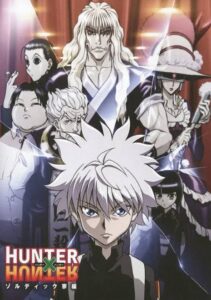
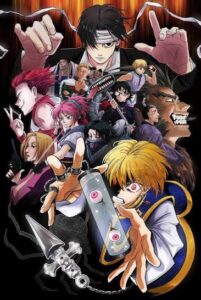
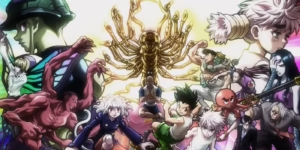
The Phantom Troupe
The Phantom Troupe is an infamous group of thieves feared across the Hunter × Hunter world.
Each member possesses unique Nen abilities and distinct personalities, making the organization one of the series’ most memorable antagonist groups.
Their actions significantly influence several major story arcs, particularly the Yorknew City Arc.
The World of Hunter × Hunter
One of Hunter × Hunter’s greatest strengths is its incredibly detailed world.
Rather than focusing on a single kingdom or continent, the series introduces a vast globe filled with unique cultures, dangerous wildlife, hidden ruins, advanced technology, criminal organizations, and mysterious locations.
Hunters serve many different roles within this world, including:
- Treasure Hunters
- Blacklist Hunters
- Gourmet Hunters
- Archaeological Hunters
- Beast Hunters
- Ruins Hunters
- Medical Hunters
- Crime Hunters
This diversity allows every story arc to explore a completely different environment while maintaining a consistent sense of discovery.
The Hunter Association itself functions as one of the world’s most influential organizations, granting licensed Hunters privileges that open doors to adventures unavailable to ordinary people.
Why Hunter × Hunter (2011) Is Different
Unlike many traditional battle anime, Hunter × Hunter (2011) rarely relies on simple power escalation.
Characters win battles through careful planning, adaptability, teamwork, and intelligent use of Nen rather than overwhelming strength alone.
The series is also known for its morally complex storytelling.
Heroes sometimes make questionable decisions, while several antagonists possess understandable motivations and emotional depth.
This balanced approach creates a world where every conflict feels meaningful and unpredictable.
Combined with exceptional pacing, memorable characters, and consistently evolving story arcs, Hunter × Hunter continues to stand among the greatest anime ever produced.
Themes & Storytelling
One of the biggest reasons Hunter × Hunter (2011) stands among the greatest anime of all time is its mature and unpredictable storytelling. While the series begins as a traditional coming-of-age adventure, it gradually evolves into a complex narrative that explores morality, ambition, friendship, revenge, sacrifice, and the true meaning of humanity.
Unlike many shonen anime, Hunter × Hunter rarely follows predictable story patterns. Characters do not always become stronger through determination alone, villains are rarely portrayed as purely evil, and victories often come at a significant emotional cost. Every arc introduces new challenges that force the characters to rethink their beliefs and adapt to situations where physical strength alone is not enough.
This constant evolution keeps the series fresh across all 148 episodes and ensures that each story arc feels distinct while contributing to the larger narrative.
The Nen Power System Explained
One of Hunter × Hunter’s defining features is Nen, a sophisticated power system that rewards intelligence, creativity, and strategy over raw power.
Nen is the ability to control one’s life energy, known as aura. Rather than granting unlimited strength, Nen allows individuals to develop personalized abilities that reflect their personalities, goals, and fighting styles.
The six primary Nen categories are:
Enhancement
Enhancers strengthen their physical abilities or objects. They excel in direct combat through increased power and durability.
Examples: Gon Freecss, Isaac Netero.
Transmutation
Transmuters change the properties of their aura to mimic other substances while retaining its original nature.
Examples: Killua Zoldyck, Hisoka Morow.
Emission
Emitters specialize in projecting aura away from their bodies while maintaining its effectiveness over long distances.
Examples: Leorio Paradinight (later in the series), Razor.
Conjuration
Conjurers create physical objects using aura, often designing weapons or tools with unique abilities.
Examples: Kurapika, Shizuku.
Manipulation
Manipulators control living beings, objects, or aura through specialized techniques.
Examples: Illumi Zoldyck, Shaiapouf.
Specialization
Specialists possess unique abilities that cannot be classified under the other five categories.
These powers are often highly unusual and unpredictable.
Examples: Chrollo Lucilfer, Neferpitou.
Why Nen Is One of Anime’s Best Power Systems
Unlike many battle anime where victory depends mainly on increasing power levels, Nen emphasizes creativity, planning, and understanding an opponent’s abilities.
Even physically weaker characters can defeat stronger opponents through clever strategies, strict conditions, or exploiting weaknesses.
The system also encourages unique abilities rather than repetitive attacks, ensuring nearly every major battle feels different.
Because Nen follows clearly established rules, battles remain believable and rewarding while allowing tremendous creative freedom.
Character Development
Gon Freecss
Gon’s journey extends far beyond becoming stronger.
Throughout the series, he learns that the world is far more complicated than he initially believed. His optimism is repeatedly challenged as he encounters difficult choices, personal loss, and the harsh realities faced by Hunters.
His emotional growth becomes one of the central themes of Hunter × Hunter.
Killua Zoldyck
Killua experiences some of the greatest character development in the series.
Raised as an assassin and taught to suppress emotion, he gradually discovers friendship, compassion, and personal freedom through his bond with Gon.
His struggle to overcome his family’s influence creates one of anime’s most memorable coming-of-age stories.
Kurapika
Kurapika’s pursuit of justice often conflicts with his desire to preserve his own humanity.
His determination to avenge the Kurta Clan drives many of his decisions, forcing him to balance revenge with the responsibilities of protecting those still living.
His emotional complexity makes him one of Hunter × Hunter’s strongest characters.
Leorio Paradinight
Although Leorio receives less screen time than the other protagonists, his growth remains meaningful.
His compassion, loyalty, and unwavering commitment to becoming a doctor reflect Hunter × Hunter’s broader message that true strength can take many forms.
World-Building
The world of Hunter × Hunter is remarkably detailed and constantly expanding.
Instead of remaining within a single region, the story explores a wide variety of locations, each with its own culture, rules, dangers, and political systems.
Major locations include:
- Whale Island
- Zoldyck Estate
- Heavens Arena
- Yorknew City
- Greed Island
- NGL (Neo-Green Life)
- East Gorteau
- Hunter Association Headquarters
Each location introduces new characters, conflicts, and opportunities for world-building, preventing the series from becoming repetitive.
The Hunter Association itself further enriches the setting by demonstrating that Hunters perform many different roles beyond combat, including exploration, archaeology, medicine, research, and criminal investigations.
Major Story Arcs
Hunter Exam Arc
The story begins with Gon taking the Hunter Examination.
This arc introduces the main cast while establishing the dangerous world of Hunters.
Zoldyck Family Arc
Following the examination, Gon and his friends travel to Killua’s family estate.
The arc explores Killua’s difficult upbringing and the influence of the legendary Zoldyck family.
Heavens Arena Arc
Gon and Killua begin learning Nen while competing inside a massive martial arts tower.
The arc introduces the series’ signature power system.
Yorknew City Arc
Often considered one of the greatest story arcs in anime, Yorknew City focuses on Kurapika’s confrontation with the Phantom Troupe.
Its darker tone and emotionally driven narrative significantly expand the series.
Greed Island Arc
Set inside a mysterious video game created using Nen, Greed Island combines adventure, strategy, and training while preparing the protagonists for greater challenges.
Chimera Ant Arc
Widely regarded as Hunter × Hunter’s masterpiece, this arc explores themes of humanity, morality, war, sacrifice, and evolution.
Its emotional storytelling and philosophical depth have earned widespread critical acclaim.
13th Hunter Chairman Election Arc
The final arc of the 2011 anime deals with the future of the Hunter Association while concluding several major character storylines.
It also provides important developments regarding Gon’s journey and introduces new possibilities for future adventures.
The Villains
Hunter × Hunter features some of anime’s most memorable antagonists because they are written with depth rather than existing solely as obstacles.
Hisoka Morow
A mysterious fighter obsessed with battling strong opponents.
His unpredictable behavior keeps viewers constantly guessing where his true loyalties lie.
Chrollo Lucilfer
The intelligent and charismatic leader of the Phantom Troupe.
His calm personality contrasts sharply with the organization’s violent reputation.
Meruem
The Chimera Ant King is widely regarded as one of anime’s greatest villains.
His philosophical journey explores the meaning of power, identity, compassion, and humanity in ways rarely seen within the shonen genre.
Neferpitou
One of the Royal Guards, Neferpitou combines terrifying strength with unwavering loyalty.
The character plays a central role in several of the series’ most emotional moments.
Why Hunter × Hunter Is Considered a Masterpiece
Several qualities distinguish Hunter × Hunter from other long-running battle anime:
- Exceptional world-building.
- The highly strategic Nen power system.
- Morally complex heroes and villains.
- Outstanding character development.
- Diverse story arcs with unique settings.
- Emotional storytelling that avoids predictable clichés.
- Battles focused on intelligence rather than overwhelming strength.
- Consistently high-quality animation from Madhouse.
- A satisfying adaptation of one of manga’s most celebrated stories.
Rather than relying on repetitive tournament arcs or endless power escalation, Hunter × Hunter continually reinvents itself while remaining true to its characters and themes.
Each story arc introduces fresh ideas, ensuring the anime remains engaging from beginning to end.
Why Hunter × Hunter Still Holds Up Today
Years after its original broadcast, Hunter × Hunter (2011) remains one of the most recommended anime for both newcomers and longtime fans.
Its timeless storytelling, memorable cast, carefully designed power system, and emotionally impactful narrative continue attracting new audiences around the world.
Even compared with many modern anime, Hunter × Hunter stands out for its intelligent writing, consistent pacing, and willingness to challenge genre conventions.
The series demonstrates that great storytelling comes not from constant action alone but from meaningful character growth, thoughtful world-building, and emotionally resonant conflicts.
Animation & Art Style
One of the greatest strengths of Hunter × Hunter (2011) is its consistently high-quality animation. Produced by Madhouse, the anime successfully balances vibrant adventure with darker, more emotional storytelling as the series progresses. While the early episodes feature bright colors and cheerful visuals that reflect Gon’s optimistic outlook, the art style gradually evolves to match the increasingly serious tone of later story arcs.
The character designs remain faithful to Yoshihiro Togashi’s original manga while being modernized for television. Each major character has a unique appearance that reflects their personality, making them instantly recognizable. From Gon’s simple green outfit to Killua’s casual clothing and Hisoka’s flamboyant costume, every design contributes to the identity of the series.
Background art is equally impressive. The anime features a wide variety of environments, including peaceful islands, bustling cities, dense forests, deserts, underground arenas, mysterious ruins, and dangerous battlefields. Every location feels distinct and helps reinforce the sense of adventure that defines Hunter × Hunter.
Action scenes are fluid and easy to follow. Rather than relying solely on flashy visual effects, the animation emphasizes movement, strategy, and character expressions during combat. This approach works especially well during Nen battles, where understanding each fighter’s abilities is just as important as watching the action itself.
As the story reaches the Chimera Ant Arc, the production quality remains consistently strong despite the darker atmosphere and more complex battles. Emotional scenes receive just as much attention as action sequences, making every important moment feel impactful.
Music & Voice Acting
The soundtrack of Hunter × Hunter (2011) perfectly complements its adventurous and emotional storytelling.
Composer Yoshihisa Hirano creates a diverse musical score ranging from uplifting orchestral themes to suspenseful battle music and emotional piano compositions. The soundtrack enhances both exciting action scenes and quieter moments of character reflection.
The anime also features several memorable opening and ending themes. The opening song “Departure!” becomes closely associated with Gon’s journey and remains one of the most recognizable anime openings of the 2010s. Different ending themes help reflect the changing tone of each major story arc.
The Japanese voice cast delivers exceptional performances throughout the series.
- Megumi Han brings warmth, determination, and innocence to Gon Freecss.
- Mariya Ise perfectly captures Killua Zoldyck’s confidence, intelligence, and emotional growth.
- Miyuki Sawashiro gives Kurapika a calm yet emotionally complex performance.
- Keiji Fujiwara (later Daisuke Namikawa) portrays Leorio Paradinight with humor and sincerity.
- Daisuke Namikawa delivers an unforgettable performance as Hisoka, balancing charm with unpredictability.
- Mamoru Miyano portrays Chrollo Lucilfer with remarkable calmness and authority.
The combination of outstanding music and voice acting helps make Hunter × Hunter one of the most emotionally engaging anime of its generation.
Strengths
Exceptional Storytelling
Hunter × Hunter consistently avoids predictable storytelling. Every story arc introduces new themes, settings, and challenges while expanding the world and its characters.
The Nen Power System
Nen is widely regarded as one of the best power systems in anime.
Its clearly defined rules encourage creativity, strategy, and intelligent combat rather than simple power escalation.
Outstanding Character Development
The series allows nearly every major character to grow naturally over time.
Gon, Killua, Kurapika, and Leorio all experience meaningful personal journeys, while many supporting characters receive memorable development as well.
Complex Villains
Hunter × Hunter features antagonists who possess realistic motivations, emotional depth, and unique philosophies.
Characters like Hisoka, Chrollo Lucilfer, and Meruem remain among the most respected villains in anime history.
Excellent World-Building
From the Hunter Association to Greed Island and the Chimera Ants, every location introduces new cultures, challenges, and mysteries.
The constantly expanding world ensures the story never feels repetitive.
Strategic Battles
Victory rarely depends solely on strength.
Instead, characters succeed through planning, teamwork, adaptability, and intelligent use of Nen abilities.
This approach keeps battles exciting and unpredictable.
Weaknesses
Although Hunter × Hunter (2011) is widely praised, it has a few minor drawbacks.
Some story arcs progress at a slower pace, particularly during the later stages of the Chimera Ant Arc, where extensive narration and multiple simultaneous events may not appeal to every viewer.
The anime also concludes before adapting the manga’s Dark Continent Expedition Arc, leaving several long-term plotlines unresolved.
In addition, some supporting characters receive limited screen time due to the large cast and constantly changing focus of different story arcs.
However, these points have little impact on the overall quality of the series.
Why You Should Watch Hunter × Hunter (2011)
There are many reasons why Hunter × Hunter (2011) continues to receive widespread praise years after its release.
It combines exciting action with intelligent storytelling, memorable characters, emotional depth, and one of anime’s most creative power systems.
The series constantly reinvents itself by introducing new settings, challenges, and themes, ensuring that each story arc offers a fresh experience.
Whether you enjoy strategic battles, emotional character development, philosophical storytelling, or large-scale adventures, Hunter × Hunter offers something for every anime fan.
Who Should Watch Hunter × Hunter?
Hunter × Hunter is highly recommended for:
- Fans of action and adventure anime.
- Viewers who enjoy strategic battles instead of simple power scaling.
- Anime fans interested in deep world-building.
- Those looking for memorable character development.
- Fans of emotionally driven stories with morally complex characters.
- Both newcomers to anime and longtime viewers seeking a modern classic.
Although it begins with a relatively lighthearted tone, the series gradually explores darker and more mature themes, making it appealing to a wide audience.
Final Verdict
Hunter × Hunter (2011) is a remarkable anime that continues to set the standard for the shonen genre. Through intelligent storytelling, exceptional character development, and the brilliantly designed Nen power system, it delivers an adventure that remains engaging from beginning to end.
Every major story arc introduces fresh ideas while expanding the world and challenging both its characters and viewers. The friendships between Gon, Killua, Kurapika, and Leorio provide the emotional foundation of the series, while memorable antagonists like Hisoka, Chrollo, and Meruem ensure that every conflict carries genuine weight.
Although the anime concludes before adapting the manga’s later chapters, it still provides a satisfying and emotionally rewarding experience.
For anyone searching for an anime that balances action, strategy, humor, adventure, and philosophical depth, Hunter × Hunter (2011) remains an essential watch.
With its timeless storytelling, unforgettable characters, and consistently high production quality, Hunter × Hunter (2011) deserves its reputation as one of the greatest anime ever created.