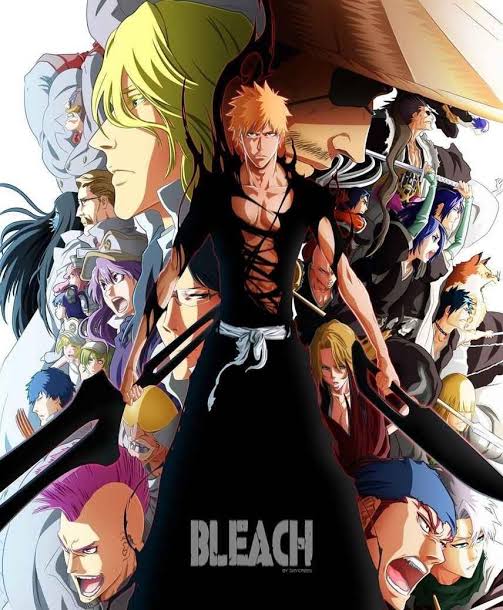
Bleach: Thousand-Year Blood War
Introduction
Bleach: Thousand-Year Blood War does something that could easily have gone wrong: it brings back a series that ended its original television run in 2012 and asks viewers to remember an enormous cast, a complicated power system and years of unfinished story.
Instead, the return feels remarkably confident.
The opening episodes immediately remind you why Bleach was one of the defining shonen anime of its era, but the new adaptation also fixes several problems that weakened the original television series. The action is sharper, the direction is more deliberate, and the production no longer has to stretch material to keep a weekly broadcast alive.
Most importantly, creator Tite Kubo is directly involved in the final adaptation. That matters because Thousand-Year Blood War is not simply animating old manga pages. The anime has expanded and reworked material, including scenes and battles that were absent or much shorter in the manga.
That makes this final chapter interesting even for people who already know how the manga ends.
Overview
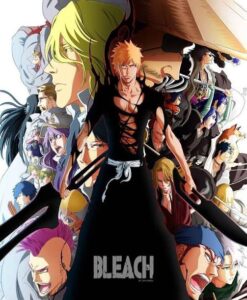
Bleach: Thousand-Year Blood War adapts the final major storyline of Tite Kubo’s Bleach manga.
The conflict begins when the Soul Society faces an enemy it did not fully understand: the Quincy empire known as the Wandenreich. Their attack is not another isolated battle for Ichigo Kurosaki to solve. It is an assault on the foundations of Soul Society itself.
That distinction changes the feel of the series.
Earlier Bleach arcs often introduced a new opponent, established their abilities and eventually built toward a decisive confrontation. Thousand-Year Blood War feels closer to an actual military campaign. Captains can be defeated quickly, familiar abilities can suddenly become useless, and victories often come with consequences.
The story also turns inward. Ichigo’s history, Uryu Ishida’s Quincy heritage and the origins of the Soul Reapers become central to the conflict.
The result is less of a “new villain appears” sequel and more of a reckoning with ideas that Bleach had been quietly building toward for years.
Story Summary — Spoiler-Free
The Thousand-Year Blood War begins with strange disappearances and escalating attacks across the spiritual world. The Soul Society soon realizes that an organized Quincy force is responsible.
The first invasion is deliberately brutal.
Instead of allowing the Soul Reapers to gradually understand their opponents, the story immediately demonstrates that the Wandenreich possess information, preparation and abilities capable of neutralizing some of the Soul Society’s strongest fighters.
Ichigo becomes involved in the conflict while simultaneously confronting uncomfortable truths about his own identity.
The story then expands beyond the initial invasion. The characters are forced to train, recover and reconsider abilities they previously believed were reliable. Meanwhile, Uryu’s connection to the Quincy side creates one of the most important personal conflicts in the entire final arc.
The pacing is much faster than the original Bleach television series.
There are fewer detours, fewer anime-original interruptions and considerably less time spent explaining a battle that could have been shown directly. The anime also uses flashbacks strategically instead of constantly stopping the current conflict for exposition.
Tonally, the arc is darker. Death is treated more seriously, victories can feel temporary, and several long-established characters are placed in situations where their usual confidence disappears.
This is Bleach with much less room for safety.
Main Characters
Ichigo Kurosaki
Ichigo’s biggest strength in the final arc is also his biggest vulnerability: he has spent much of Bleach fighting without fully understanding what he is.
The Thousand-Year Blood War finally forces that issue into the foreground.
His Zanpakuto, Hollow powers, Soul Reaper abilities and Quincy heritage stop being separate pieces of trivia. They become parts of the same question: what exactly is Ichigo?
That makes the revelations surrounding his parents more important than simply giving him another power-up.
His journey during this arc is therefore less about becoming stronger and more about accepting the complete version of himself.
Uryu Ishida
Uryu receives considerably more narrative importance than he had in many earlier portions of the anime.
His decision to stand alongside Yhwach is one of the strongest examples of the arc using an existing character rather than introducing another disposable rival.
The important part is that Uryu’s decision cannot be understood purely as betrayal.
His Quincy identity has always been connected to his family history, his grandfather’s teachings and his complicated relationship with Soul Reapers. The final arc finally puts all of those elements into direct conflict.
Rukia Kuchiki
Rukia has already undergone major development before the final arc begins, but Thousand-Year Blood War gives her an opportunity to demonstrate how far she has progressed.
Her Bankai reveal is particularly effective because it does not feel like a random upgrade added for spectacle. The visual design and the extreme nature of the ability fit the character’s long-established relationship with ice and her disciplined fighting style.
Rukia’s growth is one of the clearest examples of why returning characters can still feel relevant after hundreds of episodes.
Byakuya Kuchiki
Byakuya’s presence during the early invasion immediately demonstrates that the final arc is willing to challenge characters who once seemed untouchable.
His relationship with Rukia also gains additional weight because the story has already established how rigidly he once viewed duty.
Byakuya is no longer simply the noble captain Ichigo had to defeat. His perspective has changed, but the principles behind his behavior remain recognizable.
Shunsui Kyoraku
Shunsui becomes increasingly important as the Soul Society loses some of its older leadership.
His laid-back personality has always hidden a willingness to make unpleasant decisions. The final arc finally places him in a position where that personality becomes useful rather than merely amusing.
He represents one of the most interesting ideas in the arc: being a leader is sometimes about deciding which terrible option causes the least damage.
Yhwach
Yhwach is not introduced as another theatrical villain waiting for Ichigo to arrive.
His greatest advantage is information.
He understands the history between Quincies and Soul Reapers, knows how his enemies’ powers work and is willing to attack institutions rather than simply individuals.
That makes his threat feel fundamentally different from Aizen’s.
Aizen wanted control over the structure of the world.
Yhwach wants to reshape the structure itself.
Why You Should Watch Bleach: Thousand-Year Blood War
The strongest argument for watching is simple: the anime finally has the freedom to make Bleach look like the series Kubo’s artwork always suggested it could become.
The first invasion is an excellent example.
The stolen Bankai concept changes how Soul Reaper combat works immediately. A captain activating Bankai is no longer an automatic indication that the battle is about to turn in the Soul Reaper’s favor.
Then there are individual sequences that demonstrate how much more carefully the anime is using its runtime.
Senjumaru Shutara’s Bankai in the third cour is a particularly good example. Rather than simply showing a larger attack, the anime builds an elaborate visual sequence around the ability. Kubo himself has discussed how ideas he had imagined were passed to the anime team and how pleased he was with the resulting adaptation.
That is the kind of material that makes this adaptation worth watching even when you already know the manga.
Animation & Art Style
The production upgrade is obvious.
The original Bleach television anime often had to balance long weekly production with hundreds of episodes. Thousand-Year Blood War has a more controlled visual language, stronger compositing and considerably more attention to individual fight sequences.
The official staff credits list Tomohisa Taguchi as chief series director, Hikaru Murata as series director, Masashi Kudo as character designer and PIERROT FILMS as the animation production studio.
The difference is particularly noticeable in large-scale Bankai sequences.
Senjumaru’s Bankai does not simply rely on speed or explosions. The episode uses changing environments, composition and color to make the ability itself feel like an event.
The same approach appears in the treatment of the Royal Palace and the Wahr Welt. Architecture is often used to make the final conflict feel enormous without filling every frame with characters.
There are still moments where the production becomes less spectacular. Not every episode receives the same animation budget, and some conversations rely on limited movement.
That is normal for a television production.
What matters is that the show now knows where to spend its visual resources.
Music & Voice Acting
Shiro Sagisu returning for Thousand-Year Blood War is one of the safest creative decisions the production could have made.
His music was already inseparable from Bleach, and the final arc frequently reworks familiar musical ideas instead of pretending the franchise needs an entirely new sound.
The result is important because the anime can move from quiet character scenes into enormous battles without losing its musical identity.
The Japanese cast also benefits from years of familiarity with these characters. Masakazu Morita returns as Ichigo, Noriaki Sugiyama as Uryu and Yuki Matsuoka as Orihime, while many of the original Soul Reaper cast members also return.
Johnny Yong Bosch likewise returns as Ichigo in the English version. VIZ’s 2026 promotional material confirms his involvement in the final arc’s English dub.
The performances work particularly well because the cast does not have to re-establish who these characters are. They can focus on the consequences of everything that came before.
The Best Thing About TYBW: It Finally Has Room to Fix the Manga
This is the section I would pay the most attention to if you have already read Bleach.
The manga version of the Thousand-Year Blood War has a reputation for feeling rushed near its conclusion. Some fights end abruptly, some characters receive less attention than readers expected, and several ideas feel as though they deserved more explanation.
The anime has an unusual advantage: Kubo is involved in the adaptation.
This has already resulted in meaningful additions.
The Royal Guard receives considerably more attention than in the original manga. Senjumaru’s Bankai is dramatically expanded. Other battles and character moments have been reworked or extended.
Kubo has also stated that his supervision of the final cour was roughly comparable in volume to the amount of supervision he gave to the first three cours combined, while teasing completely new battles and developments.
That is why manga readers should not treat the anime as something they can automatically skip.
This is not merely a second format for consuming the same material.
The anime is becoming the more complete version of the final arc.
Where to Watch Bleach: Thousand-Year Blood War in 2026
Streaming rights vary significantly by region.
In India, current listings show Bleach: Thousand-Year Blood War available through Netflix and JioHotstar, with additional availability through Anime Times on Amazon. JioHotstar also lists the series with Hindi audio, making it particularly useful for Indian viewers who prefer a Hindi dub.
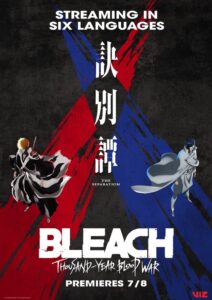
The final cour, The Calamity, began its Japanese broadcast on July 25, 2026. The official website lists streaming from July 26, with Netflix and a large number of Japanese streaming services included in its domestic distribution list.
For the United States, VIZ confirms that The Calamity streams exclusively on Hulu. For supported international markets outside the U.S., Disney+ carries the series. VIZ also confirms English and Spanish subtitles on Hulu in the U.S., while Disney+ provides several subtitle languages internationally.
The weekly release schedule began on July 25, 2026. The Japanese broadcast airs Saturdays at 11:00 p.m. JST, with streaming beginning Sunday at noon in Japan.
For Indian viewers, the current Hindi-dub rollout is not exactly the same day as the Japanese-language release. Current listings show the Hindi version arriving separately on JioHotstar.
So if you want the fastest access to each new episode, the Japanese audio with subtitles is generally the better choice.
Bleach TYBW vs. Jujutsu Kaisen
If you are deciding between Thousand-Year Blood War and Jujutsu Kaisen, I would choose based on what you want from the action.
Jujutsu Kaisen has tighter modern pacing and generally spends less time carrying the weight of a huge legacy cast.
Its fights are also more mechanically focused. Abilities such as Domain Expansions are explained around specific rules, while Bleach is more comfortable letting a character reveal an ability and allowing the visual spectacle to communicate why it matters.
Bleach wins for character history.
When Byakuya, Rukia, Kenpachi, Shunsui or Mayuri enters a major battle, the scene carries years of accumulated context. You are not simply watching a strong character fight. You know what that character has already lost, achieved or failed to understand.
Jujutsu Kaisen is the better pick if you want compact modern storytelling.
Bleach: Thousand-Year Blood War is the better pick if you want the payoff of a massive shonen universe finally reaching its final battlefield.
Manga vs. Anime: Should You Read First?
You do not need to read the manga first.
In fact, I would recommend watching the anime first if your goal is to experience the final arc with the greatest amount of surprise.
Manga readers already know the broad sequence of events, but the anime has repeatedly changed the experience through expanded scenes and new material.
The official story pages themselves show how the anime gives individual battles substantial presentation time, while Kubo’s involvement has led to material specifically designed or supervised for the adaptation.
There is also a practical reason to prefer the anime first: the music and voice acting add emotional weight to moments that can feel comparatively abrupt on the manga page.
After finishing the anime, reading the manga becomes more interesting rather than less. You can compare what Kubo originally published with what the television adaptation chose to expand.
For this particular arc, that comparison is unusually worthwhile.
Strengths
The biggest strength is focus.
There are no giant anime-original arcs interrupting the main story, and the production treats major confrontations as major events.
The second strength is payoff.
Characters who have existed since early Bleach finally receive abilities, confrontations or revelations that justify their long presence.
The third is production consistency at the level that matters most. Even when an episode is not a showcase, the visual direction generally feels more deliberate than the original weekly run.
And the biggest advantage for returning fans is Kubo’s involvement. The anime can now address material that the manga did not have enough room to explore.
Weaknesses
The hype surrounding Thousand-Year Blood War can create unrealistic expectations.
Not every episode is going to be a masterpiece.
The story also has an enormous cast, and some characters inevitably remain less developed than fans want. The final arc introduces many Sternritter, Royal Guard members and supporting fighters, but not all of them receive equal narrative attention.
Another weakness is accessibility.
This is not a good starting point for someone who has never watched Bleach. The story assumes familiarity with Ichigo, Soul Reapers, Quincies, Hollows, Zanpakuto and a huge collection of returning characters.
Even a casual viewer who remembers the original anime may benefit from a recap before starting.
The final arc is rewarding precisely because it expects you to remember the journey.
Who Should Watch This Anime?
Watch Bleach: Thousand-Year Blood War if you have already completed the original anime or manga and want to see the final storyline receive the adaptation it deserves.
It is especially suited to viewers who enjoy:
- Large-scale supernatural battles
- Sword-based combat
- Bankai reveals
- Long-running character relationships
- Darker shonen stories
- Detailed power systems
- Returning characters receiving long-awaited moments
- High-production-value action anime
Manga readers should watch it even if they disliked how quickly the manga’s ending moved.
The anime is adding enough material to justify experiencing the story again.
Who Should Skip This Anime?
Do not start here if you have never watched Bleach.
The show assumes too much previous knowledge, and trying to learn the entire universe through the final arc would turn potentially exciting reveals into a wall of unfamiliar names.
You should also skip it for now if you dislike unfinished weekly releases.
The final cour is currently airing, so viewers who prefer to binge an entire ending should wait until the complete cour has finished.
Final Verdict
Bleach: Thousand-Year Blood War is not merely a continuation that arrived years too late.
It is the version of Bleach that benefits most from modern production conditions and, more importantly, from Tite Kubo’s direct involvement.
The first three cours already demonstrated the difference. The opening invasion gave the series a harsher sense of danger. Ichigo’s identity became central rather than remaining a collection of unexplained powers. The Royal Guard finally received the attention many manga readers wanted. Battles such as Senjumaru’s Bankai showed what the anime can do when it has enough time to turn a single manga idea into a complete visual sequence.
The final cour, The Calamity, is now airing, with its Japanese broadcast beginning July 25, 2026.
My recommendation is stronger than it was for the original Bleach anime: watch this one.
If you finished the original series years ago, revisit the important storylines first. If you read the manga, watch the anime anyway because the adaptation has become its own version of the ending.
And if you are waiting for the final episode before starting, that is probably the smartest approach of all.
Bleach waited more than a decade to reach this point.
It is worth giving its ending your full attention.