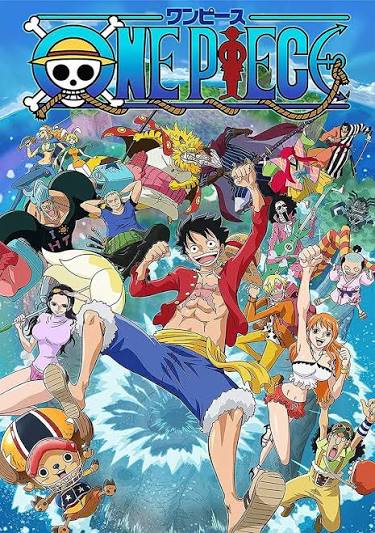
ONE PIECE
Introduction
One Piece is one of the most influential and enduring anime series ever created. It combines pirate adventure, fantasy, comedy, action, mystery, friendship, emotional drama, and enormous world-building into a single story that has continued to attract viewers for decades.
At the center of the story is Monkey D. Luffy, a cheerful and determined young pirate who dreams of becoming the Pirate King. To achieve that goal, Luffy sets out to sea and begins gathering a crew of talented individuals who share their own dreams and ambitions.
Their journey takes them across a vast world filled with islands, oceans, kingdoms, pirates, Marines, mysterious organizations, legendary figures, ancient secrets, and powerful enemies.
The treasure known as the One Piece is at the heart of the adventure. It was left behind by Gol D. Roger, the legendary Pirate King, whose final words inspired an enormous wave of piracy. Roger’s declaration that his treasure was somewhere in the world encouraged countless pirates to sail into the unknown.
Luffy is one of those pirates.
However, his goal is not simply to find treasure. His journey is about freedom, friendship, adventure, and fulfilling promises. Every member of his crew has a personal dream, and the voyage becomes a shared effort to help everyone reach their destination.
One Piece began its television broadcast in Japan on October 20, 1999. The anime is produced by Toei Animation and is adapted from Eiichiro Oda’s manga. Toei currently describes the series as a long-running television production with more than 1,000 episodes, while the official One Piece website continues to list new episodes as the story progresses.
Over the years, One Piece has grown from a relatively simple pirate adventure into an enormous interconnected story. Characters and events introduced hundreds of episodes earlier can become important again much later.
That long-term storytelling is one of the series’ greatest strengths.
For new viewers, the episode count can initially look intimidating. Yet the journey is also what makes One Piece special. The story gives its characters time to grow, its world time to expand, and its mysteries time to develop.
Whether you are interested in action, emotional character stories, pirate adventures, mysteries, fantasy worlds, or long-form storytelling, One Piece has something to offer.
Overview
One Piece is based on the manga written and illustrated by Eiichiro Oda. The manga began serialization in Weekly Shonen Jump in 1997, while the television anime began broadcasting in 1999.
Toei Animation’s official catalog describes One Piece as an adventure about pirates searching for the legendary treasure One Piece, which once belonged to the Pirate King Roger. The same source lists the anime as a television production that has been running since 1999.
The basic premise is straightforward.
Monkey D. Luffy wants to become the Pirate King.
To do that, he must find the legendary treasure known as One Piece.
However, reaching that treasure requires traveling through the most dangerous seas in the world.
Luffy does not make the journey alone.
He creates the Straw Hat Pirates, a crew made up of people who each have their own ambitions. Roronoa Zoro wants to become the world’s greatest swordsman. Nami dreams of creating a map of the entire world. Usopp wants to become a brave warrior of the sea. Sanji wants to find the legendary All Blue. Tony Tony Chopper dreams of becoming a doctor capable of curing any disease. Nico Robin wants to uncover the true history of the world. Franky wants to build a ship capable of traveling to the ends of the sea. Brook wants to reunite with an old friend and keep a promise. Later, Jinbe joins the crew with his own history and ideals.
These individual dreams are essential to the story.
One Piece is therefore not only about Luffy’s search for treasure. It is also about a group of people helping one another pursue dreams that might otherwise seem impossible.
The world surrounding them is equally important.
The seas are controlled by different powers, including the World Government, Marines, pirate crews, kingdoms, revolutionary forces, and other organizations. The balance between these groups constantly changes.
The closer Luffy gets to the world’s greatest mysteries, the more important his actions become.
The story begins with a young pirate leaving his home and gradually develops into a massive adventure involving global conflicts and secrets that have existed for centuries.
One of the most impressive aspects of One Piece is the way its world expands without abandoning its original sense of adventure.
The early episodes can feel like a traditional pirate adventure. As the story progresses, however, viewers discover that individual islands are connected to larger political, historical, and personal conflicts.
A seemingly small character can become important hundreds of episodes later.
A location introduced as a simple stop on the journey can eventually become part of a much larger mystery.
This interconnected storytelling gives One Piece a unique sense of scale.
Story Summary
One Piece begins with the legend of Gol D. Roger, the man who became known as the Pirate King.
Roger reached the final destination of the Grand Line and obtained an enormous treasure. Before his execution, he revealed that his legendary treasure, One Piece, existed somewhere in the world.
His final declaration changed the world.
Pirates from across the seas began searching for the treasure, creating what became known as the Great Pirate Era.
Years later, Monkey D. Luffy decides to become a pirate himself.
Luffy grew up admiring a pirate named Shanks, whose confidence, kindness, and adventurous spirit left a lasting impression on him.
As a child, Luffy accidentally ate a mysterious Devil Fruit. The fruit gave his body unusual properties, but it also meant he could no longer swim.
Despite that disadvantage, Luffy remained determined to become a great pirate.
When he eventually sets out on his own, his first objective is not simply to find One Piece immediately.
He needs a crew.
Luffy begins meeting people who eventually become members of the Straw Hat Pirates.
Roronoa Zoro becomes his first major crewmate.
Nami joins after the crew’s journey brings them into conflict with the Arlong Pirates.
Usopp becomes part of the crew after the events surrounding Syrup Village.
Sanji joins after Luffy visits the Baratie, a floating restaurant.
Tony Tony Chopper joins after the events of Drum Island.
Nico Robin becomes a member after the events of Alabasta.
Franky joins following the events surrounding Water 7 and Enies Lobby.
Brook joins after Thriller Bark.
Jinbe eventually becomes a Straw Hat after a much longer relationship with Luffy and the crew.
Each recruitment is more than simply adding another fighter.
The Straw Hats become a family.
They argue.
They joke.
They make mistakes.
They sometimes separate.
But when one of them is genuinely threatened, the others are willing to risk everything to bring that person home.
This emotional bond is one of the central reasons One Piece works so well.
The journey takes the crew through the East Blue, the Grand Line, the New World, and countless islands with their own cultures and conflicts.
They encounter powerful pirates, corrupt rulers, Marines, strange creatures, ancient ruins, mysterious organizations, and people whose lives have been shaped by the world’s political system.
As the crew travels farther, Luffy’s dream begins affecting the wider world.
At first, he is simply an inexperienced pirate with a small crew.
Eventually, his actions attract the attention of powerful enemies and major political organizations.
The story therefore grows naturally from a personal adventure into something much larger.
The World of One Piece
One of the greatest strengths of One Piece is its world-building.
The setting is not simply a collection of islands connected by a pirate adventure.
It is a complete world with its own political systems, history, geography, cultures, religions, technologies, species, and conflicts.
The Four Seas
The world is divided into several major seas.
The East Blue is where Luffy’s journey begins.
It is often presented as a relatively calm region compared with the dangerous Grand Line, but it still introduces several major characters and foundational events.
The other major seas are the West Blue, North Blue, and South Blue.
Each has its own history and inhabitants.
The Grand Line
The Grand Line is the central sea route that attracts ambitious pirates.
It is notorious for unpredictable weather, strange islands, powerful enemies, and dangerous navigation.
The Grand Line is not a normal ocean journey.
The environment itself can become an obstacle.
This allows One Piece to constantly introduce new locations and situations without making the world feel repetitive.
The Red Line
The Red Line is a massive continent that stretches around the world.
Together, the Red Line and Grand Line divide the planet’s oceans into different regions.
This geography becomes increasingly important as the Straw Hats progress.
The New World
The second half of the Grand Line is known as the New World.
It is considered even more dangerous than the first half.
The strongest pirate crews, powerful territories, and major global forces operate there.
For Luffy and the Straw Hats, entering the New World represents a major step toward the ultimate goal.
Main Characters
Monkey D. Luffy
Monkey D. Luffy is the protagonist of One Piece and the captain of the Straw Hat Pirates.
His greatest dream is to become the Pirate King.
Luffy’s personality is one of the defining characteristics of the series.
He is cheerful, impulsive, stubborn, fearless, and extremely loyal.
He does not always approach problems logically.
Sometimes he creates problems because he acts before thinking.
Yet his instincts often reveal an extraordinary ability to understand people.
Luffy has a simple view of freedom.
He wants to live according to his own choices.
This is one reason the title of Pirate King means something different to him than it might to other characters.
He is not primarily interested in ruling other pirates.
He wants the freedom associated with reaching the greatest adventure possible.
His relationship with his crew is equally important.
Luffy trusts his friends completely.
When someone he considers a friend is threatened, he can become extraordinarily determined.
His ability to inspire people is one of his most important strengths.
Roronoa Zoro
Roronoa Zoro is the first major member to join Luffy’s crew.
He is a swordsman whose ultimate dream is to become the world’s greatest swordsman.
Zoro uses a distinctive three-sword fighting style, including a sword held in his mouth.
He is serious about combat but often provides comedy through his terrible sense of direction and deadpan reactions.
Zoro’s loyalty to Luffy is one of the strongest relationships in the crew.
Although he frequently disagrees with Luffy, he respects him as captain.
Zoro represents discipline, endurance, and determination.
His personal journey is closely connected to his promise to fulfill the dream of his childhood friend and rival, Kuina.
Nami
Nami is the Straw Hats’ navigator.
She is one of the most practically important members of the crew because navigating the Grand Line without expert knowledge is extremely dangerous.
Her dream is to create a complete map of the world.
Nami is intelligent, financially motivated, and often responsible for keeping the rest of the crew from making completely reckless decisions.
Her early story is deeply emotional and establishes one of the series’ strongest examples of Luffy’s willingness to help someone he cares about.
As the story progresses, Nami develops from a skilled navigator into an essential member of the crew.
Usopp
Usopp is the crew’s sniper and one of its most entertaining personalities.
He is known for telling exaggerated stories and claiming to be much braver than he actually feels.
However, his apparent cowardice is part of what makes his character development so effective.
Usopp does not begin as a fearless warrior.
He is often frightened.
Yet he repeatedly finds the courage to act when his friends need him.
His dream is to become a brave warrior of the sea.
That dream is closely connected to the stories he tells about his father and the kind of person he wants to become.
Sanji
Sanji is the Straw Hats’ cook.
He is also one of the crew’s strongest fighters.
Sanji learned cooking at the Baratie under Zeff, a former pirate who became his mentor.
His dream is to find the All Blue, a legendary sea where fish from every ocean are said to gather.
Sanji’s fighting style is based primarily on his legs because he refuses to damage his hands, which he considers essential for cooking.
His character combines humor, elegance, compassion, and a strong sense of responsibility.
Food is an important part of Sanji’s identity.
He believes that feeding a hungry person is something a cook should never refuse.
Tony Tony Chopper
Tony Tony Chopper is the Straw Hats’ doctor.
He is a reindeer who gained human-like abilities after consuming a Devil Fruit.
Despite his cute appearance, Chopper has a deeply emotional history.
He was rejected by both humans and reindeer before receiving kindness from Dr. Hiriluk and later Dr. Kureha.
His dream is connected to medicine and the desire to become a doctor capable of curing any illness.
Chopper often provides comic relief, but his medical knowledge is vital to the crew.
Nico Robin
Nico Robin is the archaeologist of the Straw Hat Pirates.
Her greatest goal is to discover the true history of the world.
This makes her one of the most important characters for the series’ larger mysteries.
Robin possesses knowledge that the World Government considers extremely dangerous.
Her childhood was shaped by persecution and loneliness, making her eventual acceptance by the Straw Hats particularly meaningful.
Robin is calm, intelligent, and observant.
Her personality contrasts with the more chaotic members of the crew.
Franky
Franky is the Straw Hats’ shipwright.
He is a cyborg who combines engineering knowledge with extraordinary physical abilities.
Franky built and maintains the Thousand Sunny, the crew’s second major ship.
His dream is to build a ship capable of reaching the end of the Grand Line and then see that ship complete its journey.
Franky’s personality is loud, eccentric, emotional, and energetic.
Despite his exaggerated appearance, his character has a strong emotional foundation.
Brook
Brook is the Straw Hats’ musician.
He is a living skeleton who returned to life because of his Devil Fruit ability.
Brook’s appearance and humor make him one of the strangest members of the crew.
However, his story contains some of the series’ most emotional themes involving friendship, loneliness, promises, and loss.
Brook’s dream is to reunite with Laboon, a whale connected to his past.
His music and personality bring another dimension to the crew.
Jinbe
Jinbe is a fish-man and an experienced helmsman.
He has a long history involving major political and personal conflicts within the One Piece world.
Jinbe’s calm personality and experience provide balance to the Straw Hats.
He is also deeply connected to themes involving humans, fish-men, discrimination, equality, and coexistence.
His eventual membership reflects how far the Straw Hat crew has evolved since its earliest days.
Important Characters Outside the Straw Hats
The world of One Piece contains hundreds of important characters, but several figures have an especially significant impact on the story.
Shanks
Shanks is one of the most important figures in Luffy’s childhood.
He is the pirate who inspired Luffy to pursue the life of a pirate.
Shanks gave Luffy his famous straw hat, which became one of the most recognizable symbols in the series.
His influence on Luffy extends far beyond his role as a childhood mentor.
Gol D. Roger
Gol D. Roger was the Pirate King.
He reached the final island and became the central figure responsible for beginning the Great Pirate Era.
Although Roger died before Luffy’s story began, his legacy shapes nearly everything that follows.
The mystery surrounding Roger’s journey is one of the biggest unanswered questions in One Piece.
Portgas D. Ace
Ace is a major character whose relationship with Luffy becomes extremely important.
He is connected to Luffy’s childhood and the larger legacy of the Pirate King.
Ace’s story also demonstrates how deeply personal relationships can become connected to global events.
Trafalgar D. Water Law
Trafalgar Law is a pirate captain who becomes one of the most important allies associated with Luffy.
His intelligence, Devil Fruit ability, and complicated past make him a major figure in the story.
Law’s relationship with Luffy also demonstrates the unpredictable alliances that develop throughout the New World.
Marshall D. Teach
Marshall D. Teach, better known as Blackbeard, is one of the most important antagonistic forces in the series.
He represents a different approach to piracy from Luffy.
While Luffy values freedom and friendship, Blackbeard is highly ambitious and willing to manipulate others to achieve his goals.
Their eventual conflict is one of the major possibilities established by the broader story.
Akainu
Akainu is a powerful Marine officer whose interpretation of justice is extremely strict.
His character represents one of the most uncompromising sides of the Marine organization.
His ideology creates a strong contrast with Luffy’s idea of freedom.
Major Story Arcs
One Piece is divided into numerous story arcs and sagas.
Each arc usually introduces a new location, conflict, enemy, or mystery while also contributing to the larger narrative.
East Blue Saga
The East Blue Saga introduces Luffy and the early members of the Straw Hat Pirates.
It establishes the core concept of the series and introduces characters such as Zoro, Nami, Usopp, and Sanji.
This part of the story is comparatively simple, but it lays the foundation for nearly everything that follows.
The official One Piece website identifies the East Blue story as covering the opening portion of the anime, including episodes 1 through 61.
Alabasta Saga
The Alabasta Saga expands the story dramatically.
The Straw Hats become involved in a conflict threatening an entire kingdom.
This saga introduces the criminal organization Baroque Works and the powerful warlord Crocodile.
It also demonstrates that the crew’s adventures can have political consequences.
Skypiea Saga
The Skypiea story takes the Straw Hats to a mysterious land in the sky.
It is one of the clearest examples of One Piece embracing fantasy adventure.
The arc explores mythology, ancient history, conflict between different groups, and the idea of dreams.
Skypiea is also important because details that seem disconnected at first can become relevant to the broader story.
Water 7 and Enies Lobby
Water 7 and Enies Lobby form one of the most highly regarded sections of One Piece.
The story becomes much more personal as the Straw Hats face internal conflict and an enemy connected to the World Government.
The arc explores loyalty, identity, sacrifice, and the meaning of belonging to a crew.
It also gives several Straw Hat characters major emotional development.
Thriller Bark
Thriller Bark introduces a horror-inspired island filled with zombies, strange creatures, and supernatural threats.
Gecko Moria serves as the main antagonist.
Although the arc has a lighter and more comedic tone in several places, it also introduces important concepts that become relevant later.
Sabaody Archipelago
Sabaody marks a major change in the story.
The Straw Hats encounter powerful pirates, Marines, nobles, and other forces.
The arc demonstrates just how dangerous the world has become.
It also introduces several characters who become extremely important later.
Amazon Lily
Amazon Lily focuses on Luffy after the events at Sabaody.
The island is ruled by Boa Hancock, one of the most recognizable characters in the series.
The arc also provides a transition toward much larger events.
Impel Down
Impel Down follows Luffy as he enters the world’s most infamous prison.
The arc brings together characters from different parts of the story.
It also demonstrates how Luffy’s willingness to trust people can create unexpected alliances.
Marineford
Marineford is one of the most important story arcs in One Piece.
It brings together many of the world’s strongest powers and fundamentally changes the direction of the story.
The conflict demonstrates the enormous scale of the world’s political and military forces.
It also has lasting consequences for Luffy and the Straw Hat Pirates.
Fish-Man Island
After the crew’s separation and training period, the Straw Hats reunite and enter the New World.
Fish-Man Island explores discrimination, hatred, history, and the complicated relationship between humans and fish-men.
It also provides important information about the world’s deeper mysteries.
Punk Hazard
Punk Hazard introduces a dangerous island divided by extreme environmental conditions.
The Straw Hats become involved with Trafalgar Law and begin moving toward larger conflicts in the New World.
The arc establishes important connections that continue into later storylines.
Dressrosa
Dressrosa is one of the largest arcs in the New World.
The Straw Hats and their allies confront Donquixote Doflamingo, a powerful pirate and former World Government-affiliated figure.
The arc explores oppression, manipulation, family, inherited will, and freedom.
It also expands Luffy’s influence in the pirate world.
Zou
Zou is comparatively different from Dressrosa.
Rather than focusing primarily on a huge battle, it provides important information and advances the larger mystery.
The island’s inhabitants are closely connected to events that eventually become central to the New World storyline.
Whole Cake Island
Whole Cake Island centers heavily on Sanji and his complicated family background.
The Straw Hats become involved with Big Mom, one of the most powerful pirates in the world.
The arc combines comedy, family drama, political arrangements, action, and emotional storytelling.
It also gives Sanji some of his most important character development.
Wano Country
Wano Country is one of the longest and most ambitious arcs in One Piece.
The story introduces a country isolated from the rest of the world and ruled under oppressive conditions.
The arc involves Luffy, the Straw Hats, the samurai of Wano, the Worst Generation, powerful pirates, and numerous other characters.
Wano expands the history of the world while delivering major battles and significant developments for several characters.
Egghead
The Egghead storyline moves deeper into the mysteries surrounding the World Government, science, the Void Century, and the world’s hidden history.
The island is associated with Dr. Vegapunk, one of the greatest scientific minds in the One Piece world.
The arc combines futuristic technology with ancient mysteries.
It also raises the stakes for the Straw Hats and the world as a whole.
Elbaf
The story continues into Elbaf, a location that has been anticipated for many years.
Elbaf is particularly important because of its connection to giants and the long-running mythology surrounding their homeland.
The official One Piece website currently lists the anime in the Elbaf storyline, including episode 1169, “The Legend Hidden in Elbaf: The Truth of the Man-Eating Mountain,” broadcast on July 12, 2026.
The Devil Fruit System
Devil Fruits are one of the most recognizable elements of One Piece.
They are mysterious fruits that grant supernatural abilities to those who eat them.
However, there is a major drawback.
A Devil Fruit user loses the ability to swim.
This is particularly ironic in a pirate story.
Devil Fruits allow the series to introduce an enormous variety of abilities.
Some characters can transform their bodies.
Others can manipulate elements.
Some can create objects, control environments, manipulate other people, or transform into animals.
The variety of powers gives One Piece enormous creative freedom.
Devil Fruits also contribute to the individuality of characters.
A character’s ability can influence their personality, fighting style, role within a crew, and even their place in society.
Haki
Haki is another important power system in One Piece.
Unlike Devil Fruits, Haki does not depend on eating a special fruit.
It is connected to a person’s spiritual strength and ability to perceive, defend against, or exert influence over others.
The system eventually develops into several distinct forms.
Observation Haki allows users to sense the presence and intentions of others.
Armament Haki strengthens attacks and defenses.
Conqueror’s Haki is associated with individuals possessing exceptional willpower and the qualities of a natural leader.
Haki becomes increasingly important as the Straw Hats enter more dangerous waters.
It provides a way for characters to fight powerful opponents even when Devil Fruit abilities are not enough.
The Marines and the World Government
The World Government is one of the most important political powers in One Piece.
It controls a large portion of the world and operates through various institutions, including the Marines.
The Marines are responsible for enforcing the law and pursuing pirates.
However, One Piece does not portray the conflict as a simple battle between good Marines and evil pirates.
Different characters have different ideas about justice.
Some Marines genuinely want to protect civilians.
Others follow orders without questioning them.
Some believe that absolute justice is necessary even when innocent people suffer.
This creates a more complicated moral landscape.
The Straw Hats are pirates, but they are not portrayed as conventional villains.
They often help ordinary people.
They fight corrupt rulers.
They defend communities.
They free people from oppression.
This makes the relationship between piracy and morality one of the recurring themes of the story.
The Four Emperors
The Four Emperors are among the most powerful pirate figures in the world.
They control enormous territories and possess crews capable of challenging governments and other major powers.
Characters such as Shanks, Kaido, Big Mom, and eventually Luffy become associated with this level of power.
The Emperor system demonstrates how the balance of power works in the New World.
A pirate does not become influential simply by being personally strong.
They need allies, territory, reputation, crew members, and resources.
Luffy’s rise therefore represents more than his own improvement.
It also represents the growth of the Straw Hat Pirates as a collective force.
The Revolutionary Army
The Revolutionary Army is another major power in the world.
It opposes the World Government and seeks to challenge the political system that controls much of the world.
Monkey D. Dragon, Luffy’s father, leads the Revolutionary Army.
This creates an interesting connection between Luffy and the larger political conflict.
Luffy himself is not primarily interested in revolution.
His motivation is freedom.
However, his actions repeatedly put him into conflict with systems of oppression.
Themes of One Piece
One Piece is often described as a pirate adventure, but its themes go far beyond treasure hunting.
Freedom
Freedom is arguably the most important theme in the series.
Luffy wants to become the Pirate King because he associates that position with being the freest person on the sea.
His dream is not about controlling others.
It is about living without restrictions.
Friendship
The Straw Hats are more than a collection of adventurers.
They become a family.
Their loyalty to one another repeatedly drives the story.
The series shows that friendship can involve sacrifice, trust, disagreement, and forgiveness.
Dreams
Every major Straw Hat has a dream.
Those dreams vary dramatically.
One wants to become Pirate King.
Another wants to become the world’s greatest swordsman.
Another wants to map the world.
Another wants to become a brave warrior.
These dreams give every character a personal reason to continue moving forward.
Inherited Will
One Piece frequently explores the idea that ideals can survive the people who originally held them.
A person can die, but their dream can be carried forward by someone else.
This concept connects different generations of characters.
Oppression and Freedom
Many arcs involve characters living under oppressive rulers or systems.
Luffy repeatedly reacts strongly to situations where people are denied basic freedom.
His response is usually direct.
He does not deliver complicated political speeches.
He simply believes that people should be free to live their lives.
Family
One Piece has a broad definition of family.
Blood relationships matter, but chosen family can be just as important.
The Straw Hats are not related by blood, yet they repeatedly demonstrate the kind of loyalty normally associated with family.
Animation and Art Style
The visual identity of One Piece has changed significantly throughout its long run.
The earliest episodes use a relatively simple and expressive animation style.
Characters have exaggerated facial expressions and distinctive silhouettes.
This style helps the series maintain its comedic personality even during serious stories.
As the anime progresses, the visual presentation becomes more elaborate.
Large battles receive greater animation attention, and modern episodes make extensive use of cinematic framing, detailed effects, dynamic camera movement, and more fluid action.
Toei Animation has produced the series since its beginning.
The studio’s current catalog describes One Piece as a long-running animation with more than 1,000 episodes, while its U.S. catalog lists the television series as a production that began in 1999 and remains in production.
The visual style is also extremely recognizable.
Oda’s character designs were created to support exaggerated personalities.
Characters can have unusual proportions, strange hairstyles, giant bodies, tiny bodies, animal-like features, or completely unconventional appearances.
This freedom is one of the reasons One Piece can create such a diverse cast.
The world itself is equally colorful.
Every island can have a completely different visual identity.
One location may resemble a desert kingdom.
Another may be a winter island.
Another may exist in the sky.
Another may have futuristic technology.
Another may be inspired by historical cultures.
This constant visual variety keeps the adventure feeling fresh.
Music and Voice Acting
Music has been an important part of One Piece since the beginning.
The series uses energetic opening themes, emotional background music, dramatic orchestration, and comedic sound cues.
The soundtrack often reinforces the adventurous atmosphere.
Heroic themes can make Luffy’s arrival feel larger than life, while quieter compositions can emphasize emotional scenes.
The Japanese voice cast has also become closely associated with the characters.
Mayumi Tanaka voices Monkey D. Luffy.
Kazuya Nakai voices Roronoa Zoro.
Akemi Okamura voices Nami.
Kappei Yamaguchi voices Usopp.
Hiroaki Hirata voices Sanji.
Ikue Otani voices Chopper.
Yuriko Yamaguchi voices Nico Robin.
Kazuki Yao voices Franky.
Cho voices Brook.
The official Toei Animation staff page lists these principal Japanese cast members along with the series’ production staff.
The performances are especially impressive considering how long the characters have existed.
Luffy’s voice has to communicate his childish enthusiasm, intense determination, emotional vulnerability, and explosive anger.
Zoro requires a much more controlled performance.
Nami moves between comedy, frustration, fear, intelligence, and emotional vulnerability.
The voice cast gives each character a distinct identity that remains recognizable even after hundreds of episodes.
Strengths
Exceptional World-Building
The world of One Piece is enormous, but it rarely feels random.
Locations, characters, organizations, and historical events often connect to one another.
The longer you watch, the more connections you begin to notice.
Memorable Characters
One Piece has an unusually large cast.
Even characters who appear briefly can be memorable because of their designs, personalities, motivations, or relationships.
The Straw Hats are particularly strong because each member has a distinct dream and personal history.
Emotional Storytelling
One Piece can move between comedy and tragedy very quickly.
A silly character can suddenly receive an emotional backstory.
A funny situation can lead into a serious conflict.
The emotional impact is often stronger because the series spends so much time developing its characters.
Long-Term Foreshadowing
The story frequently plants information long before explaining its importance.
This creates a rewarding experience for viewers who enjoy mysteries.
Something that seems like a minor detail can eventually become relevant to the larger plot.
Creative Powers
Devil Fruits and Haki create a flexible combat system.
Fights are not always about raw physical strength.
Strategy, creativity, teamwork, and understanding an opponent’s ability can all matter.
Strong Themes
Freedom, dreams, friendship, inherited will, oppression, family, and justice are woven throughout the story.
These themes give the adventure more emotional weight.
Sense of Adventure
Perhaps the most important strength is the feeling of exploration.
Every new island can bring something unexpected.
The viewer does not always know what kind of world the Straw Hats will discover next.
Weaknesses
Extremely Long
The biggest barrier to entry is the length.
One Piece has surpassed 1,000 television episodes, and the anime is still ongoing. Toei currently lists it as a production with more than 1,000 episodes.
For someone accustomed to 12- or 24-episode anime, starting a series this long can feel overwhelming.
Pacing
The anime’s pacing has been criticized by some viewers, particularly in certain long-running arcs.
Because the anime has traditionally followed an ongoing manga, the adaptation sometimes spends more time on individual scenes than a modern seasonal anime might.
Viewers who prefer fast pacing may find some sections slow.
Filler and Anime-Original Material
Like many long-running anime adaptations, One Piece contains episodes and sections that are not directly adapted from the manga.
Not all anime-original material is equally important.
Some filler arcs can be skipped by viewers who want to focus primarily on the manga storyline.
Large Cast
The enormous cast can make the story difficult to follow.
There are pirates, Marines, government officials, kingdoms, revolutionaries, former enemies, allies, civilians, and numerous other groups.
Remembering every name is unnecessary, but new viewers may still feel overwhelmed.
Tone Changes
One Piece can move rapidly between comedy and serious drama.
Some viewers love this contrast.
Others may find the transition unusual, particularly during emotionally heavy arcs.
What Makes One Piece Different?
One Piece is not simply long because it has many episodes.
It is long because the story is designed around exploration.
The Straw Hats do not travel through a single continuous setting.
They visit different islands.
Each island has its own culture, politics, geography, characters, history, and conflict.
This structure gives the story enormous flexibility.
The series can tell a political story in one arc, a survival adventure in another, a mystery in another, and a comedy-focused story somewhere else.
Yet the same characters remain at the center.
This creates an unusual combination of episodic adventure and long-term storytelling.
A viewer can enjoy an individual island’s story while also gradually discovering that it connects to a much larger narrative.
Why the Straw Hat Crew Works So Well
The Straw Hat Pirates are effective because they are not interchangeable.
Each member fills a specific role.
Luffy is the captain.
Zoro is the swordsman.
Nami is the navigator.
Usopp is the sniper.
Sanji is the cook.
Chopper is the doctor.
Robin is the archaeologist.
Franky is the shipwright.
Brook is the musician.
Jinbe is the helmsman.
Their professional roles make the crew believable as a functioning pirate group.
But their emotional roles matter just as much.
Luffy gives the crew direction.
Zoro provides stability and strength.
Nami keeps everyone alive through navigation.
Usopp provides creativity and ranged support.
Sanji provides food and combat ability.
Chopper provides medical care.
Robin provides historical knowledge.
Franky maintains the ship.
Brook provides music and morale.
Jinbe provides experience and calm judgment.
This balance means that every member has a reason to be on the ship.
Why Luffy Is Such a Popular Protagonist
Luffy is an unusual shonen protagonist.
He is not interested in becoming a king because he wants political authority.
He does not want to become rich.
He does not want to control the world.
His dream is connected to freedom.
Luffy also does not judge people primarily by their social status.
He often makes friends with people from completely different backgrounds.
This is important because the world of One Piece is heavily divided by social and political structures.
Luffy’s approach is much simpler.
He cares about whether someone is trustworthy.
That simplicity allows him to cut through complicated situations.
He may not understand every political detail, but he understands when someone is suffering.
His instinct to help becomes one of the forces that repeatedly drives the story forward.
The Importance of Dreams
The Straw Hats are united by a shared journey, but their dreams remain individual.
This is important.
The series never suggests that everyone should want the same thing.
Instead, different characters pursue different goals.
Zoro wants to become the strongest swordsman.
Nami wants to map the world.
Usopp wants courage.
Sanji wants the All Blue.
Chopper wants to become a great doctor.
Robin wants to uncover history.
Franky wants to see his ship reach the end of the world.
Brook wants to fulfill his promise.
Jinbe wants to help create a world where different peoples can coexist.
Luffy wants to become Pirate King.
These dreams give the story emotional direction.
The treasure is important, but the journey matters because of the people pursuing it.
Why One Piece Has Such a Strong Emotional Impact
The series has a unique advantage because of its length.
Viewers spend years with characters.
A character who appears for a short time can become important because the story establishes their history and relationships.
The Straw Hats also experience setbacks.
They do not always win easily.
They sometimes lose.
They sometimes separate.
They sometimes question their own abilities.
These moments make later victories more satisfying.
The emotional scenes also benefit from contrast.
One Piece can spend several episodes being completely ridiculous before suddenly revealing a character’s painful history.
Because the viewer has become attached to that character, the emotional change can feel surprisingly powerful.
One Piece for New Anime Viewers
The biggest question for a new viewer is usually simple:
Is One Piece too long to start?
The answer depends on what you enjoy.
If you prefer short anime that tell a complete story in one or two seasons, One Piece may not be the best first choice.
But if you enjoy long-form storytelling, One Piece can become one of the most rewarding anime experiences available.
The important thing is not to think about the entire episode count.
You do not need to finish more than a thousand episodes immediately.
Start with the East Blue story.
Meet Luffy.
Meet Zoro.
Meet Nami.
Meet Usopp.
Meet Sanji.
See how the crew forms.
Once you become invested in the characters, the length becomes much less intimidating.
The early episodes also have a charm that is different from the modern animation style.
The series grows with its audience.
How to Approach the Long Episode Count
New viewers should avoid treating One Piece like a race.
Trying to watch dozens of episodes every day can turn the experience into a chore.
The series is better enjoyed at a comfortable pace.
You can also use arc guides to organize the journey.
Some viewers prefer watching everything.
Others skip filler.
Some viewers read the manga for faster pacing and then watch major scenes in the anime.
There is no single correct way to experience One Piece.
The important thing is to enjoy the journey.
Why You Should Watch One Piece
There are many reasons to watch One Piece.
The first is the adventure itself.
The series creates a genuine feeling of exploration.
The viewer never knows exactly what the next island will look like or what kind of people the Straw Hats will meet.
The second is the crew.
The Straw Hats are one of the most recognizable groups in anime because their relationships develop over an enormous amount of time.
The third is the world-building.
The world becomes more complicated with every major storyline.
The fourth is the mystery.
One Piece contains numerous unanswered questions.
What exactly is the One Piece?
What happened during the Void Century?
What is the true history of the world?
What is the significance of the Will of D.?
What happened during the mysterious historical events that the World Government attempts to conceal?
The series does not answer everything immediately.
Instead, it encourages viewers to keep watching.
The fifth reason is emotional storytelling.
The series can be extremely funny, but it can also be deeply serious.
It is capable of making viewers laugh at one character in one episode and then care deeply about that same character later.
Is One Piece Worth Watching?
Yes.
One Piece is worth watching if you enjoy long-form adventure storytelling and are willing to invest time in its world.
Its greatest advantage is the amount of time it gives to its characters.
The Straw Hats are not simply introduced and immediately given a final personality.
They change.
They experience failure.
They develop new skills.
They make new friends.
They encounter new enemies.
Their understanding of the world changes.
The world itself also changes around them.
This creates the feeling that the viewer is traveling alongside the characters.
That is difficult to replicate in a short anime.
The biggest disadvantage is obvious: the commitment required.
With more than 1,000 episodes and the story still ongoing, catching up takes considerable time.
However, the series’ longevity is also part of what makes it special.
Final Verdict
One Piece is a massive pirate adventure that has grown into one of the most ambitious stories in anime.
What begins with Monkey D. Luffy setting out to sea eventually becomes a worldwide story involving pirates, Marines, kingdoms, emperors, revolutionaries, ancient history, mysterious powers, and long-hidden secrets.
At its center, however, the story remains remarkably simple.
A young pirate wants to be free.
He wants to become the Pirate King.
He wants to travel with his friends.
And he wants each member of his crew to achieve their own dream.
That simplicity is what keeps the enormous story emotionally grounded.
The world can become complicated.
The political conflicts can become enormous.
The battles can involve hundreds of characters.
The mysteries can stretch back hundreds of years.
But the Straw Hat Pirates remain a group of friends traveling together.
That is the heart of One Piece.
The anime’s long history is also part of its legacy. Toei Animation began producing the television series in 1999, and the anime has continued through more than a thousand episodes. The official production catalog still identifies One Piece as an ongoing television series, while the official One Piece website continues to publish current episode information.
For beginners, the episode count can be intimidating.
Do not let it stop you.
You do not need to think about reaching the latest episode before you start.
Simply begin the journey.
Watch Luffy meet his first crewmates.
Watch the Straw Hats travel from island to island.
Watch their relationships develop.
Watch their dreams become connected.
Over time, the world of One Piece becomes much larger than the treasure that started the adventure.
Its greatest treasure is arguably the journey itself.
For fans of adventure anime, shonen storytelling, fantasy worlds, emotional character development, comedy, and long-running mysteries, One Piece remains one of the most rewarding series to experience.