Alex Louis Armstrong
At first glance, Alex Louis Armstrong seems like the easiest character in Fullmetal Alchemist: Brotherhood to understand. He is an enormous State Alchemist with a ridiculous amount of muscle, a dramatic personality, a famous family, and a habit of crying whenever his emotions become too strong.
Then the story puts him in a serious situation.
That is when Armstrong becomes much more interesting.
Behind the comedy is a highly skilled soldier who has witnessed some of the worst parts of Amestria’s military history. He carries guilt over the Ishvalan conflict, cares deeply about protecting other people, and repeatedly struggles between his identity as a soldier and his personal sense of right and wrong.
Armstrong’s comedy is therefore not his entire character. It is the surface layer. Underneath it is one of Brotherhood’s more humane military characters.
Character Overview
Alex Louis Armstrong is a State Alchemist and a member of the Armstrong family, a wealthy and influential military family known for its physical strength, artistic traditions, and long history of military service.
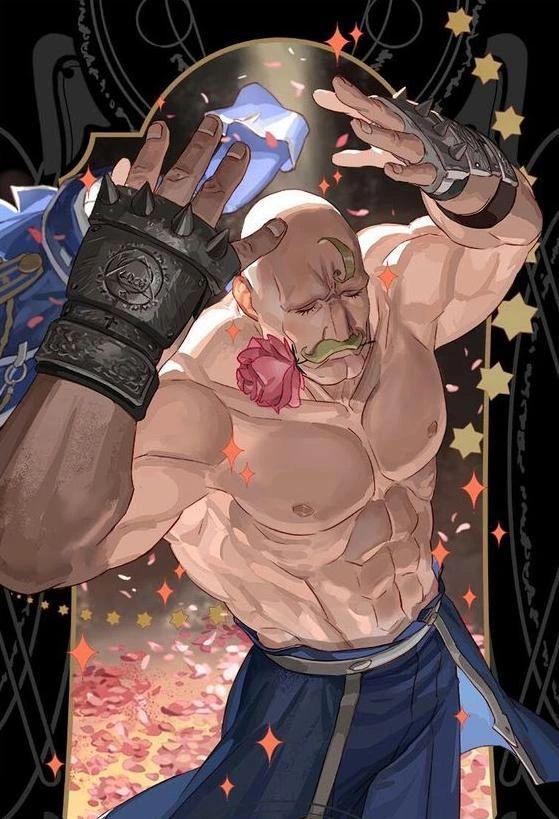
He is introduced as a towering, heavily muscular man with a large blond moustache and distinctive pink hair. His appearance is intentionally exaggerated, matching the series’ comedy-heavy presentation of him.
Armstrong is extremely emotional and openly affectionate toward people he respects. He can become excited very quickly, proudly announces his family’s achievements, and has a habit of flexing his muscles at completely inappropriate moments.
Yet calling him simply “the funny strong guy” misses what makes him work.
Armstrong is kind. He genuinely wants to protect people, and unlike characters who use kindness as a performance, his concern for others repeatedly affects his decisions.
His personality also creates an interesting contradiction. He is physically intimidating but emotionally gentle. He looks like someone who should be terrifying in battle, yet he is often one of the most compassionate people in the room.
That contrast is one of the reasons his comedy does not completely destroy his credibility.
Armstrong’s Alchemy and Fighting Style
Armstrong’s specialty is a form of combat alchemy that works particularly well with his physical strength.
His unique weapon is a pair of metal gauntlets marked with transmutation circles. By striking the ground or another surface, he can use alchemy to manipulate the material around him and create stone projectiles, walls, and other offensive or defensive structures.
The result is an unusual combination of brute strength and technical skill.
Armstrong does not fight like Edward Elric, who constantly changes his surroundings and improvises different weapons. Armstrong’s approach is more direct. He combines hand-to-hand combat with earth-based transmutation, turning his enormous physical strength into part of his alchemical fighting style.
His famous “Strong Arm Alchemy” reputation is not just a joke, either. Armstrong is genuinely dangerous when he gets serious.
What makes his ability especially fitting is how closely it matches his personality. His fighting style is powerful and straightforward, but it is not purely destructive. He can use his alchemy to create barriers and alter the battlefield instead of simply attacking an opponent.
That defensive quality suits a character whose strongest instinct is often to protect other people.
Armstrong as a Soldier
This is where Brotherhood gives Armstrong more depth than his early comedy suggests.
Armstrong is a State Alchemist, which means he belongs to the same military structure responsible for some of the darkest events in Amestrian history.
He participated in the Ishvalan conflict.
The important part is that Armstrong does not treat this history casually. He carries guilt over what happened and struggles with the fact that he was part of the military during a campaign that caused enormous suffering.
His reaction is very different from the attitude of characters who completely justify their actions because they were following orders.
Armstrong is not comfortable with what he did.
This creates a fascinating contrast with his usual personality. The loud, cheerful man who constantly celebrates his family and muscles suddenly becomes hesitant when confronted with the reality of war.
That change does not feel like the story is giving him a completely different personality. Instead, it reveals that the cheerful Armstrong was never the whole picture.
He can laugh loudly and cry dramatically while still carrying memories he would rather forget.
Role in the Story
Armstrong becomes an important ally to Edward and Alphonse and repeatedly assists them when the situation becomes dangerous.
He is particularly valuable because he combines military authority, combat experience, alchemical ability, and genuine concern for the brothers.
However, his biggest contribution is not simply winning fights.
Armstrong represents a different kind of State Alchemist.
Edward is a young boy who entered the military because he needed access to its resources. Roy Mustang is an ambitious officer attempting to change the country from within. Other State Alchemists have their own complicated relationships with military power.
Armstrong sits somewhere between them.
He remains part of the military, but his loyalty is ultimately directed toward people rather than the institution itself.
This becomes especially important when the military hierarchy begins demanding actions that conflict with his conscience.
Armstrong is not a revolutionary by nature. He does not spend the entire story planning to overthrow the government. His instinct is much simpler: protect the people in front of him.
That simplicity is actually one of his strengths.
Armstrong and Major General Olivier Mira Armstrong
Armstrong’s relationship with his older sister, Olivier Mira Armstrong, is one of the funniest and most revealing parts of his character.
The two could hardly seem more different.
Olivier is cold, disciplined, intimidating, and brutally practical. She commands Fort Briggs with an almost absolute level of authority.
Alex, meanwhile, is emotional, expressive, affectionate, and dramatically proud of his family.
Their differences make their interactions naturally funny, but there is something more important underneath the comedy.
Armstrong genuinely respects Olivier’s strength.
He may be terrified of her, but he does not resent her personality. Their relationship demonstrates that Armstrong’s sensitivity does not mean weakness. He understands that Olivier possesses qualities he does not naturally have, while Olivier recognizes that her brother has his own strengths.
The contrast also gives us a better understanding of the Armstrong family.
Their family’s obsession with strength does not produce identical personalities. Alex interprets strength through compassion and protection, while Olivier interprets it through discipline and survival.
That difference becomes especially important during the Briggs storyline.
Armstrong and Edward Elric
Armstrong’s relationship with Edward is mostly comedic, but it also works because Armstrong treats Edward with genuine respect.
Edward is often frustrated by Armstrong’s behavior. The older man’s enthusiasm, dramatic posing, and constant displays of physical strength are almost guaranteed to get on Edward’s nerves.
Yet Armstrong never treats Edward as insignificant because of his age.
He recognizes Edward’s courage and ability, even when Edward himself is frustrated with the situation.
There is also a subtle difference between how the two characters approach strength.
Edward is obsessed with becoming strong enough to solve his problems and protect Alphonse. Armstrong already possesses enormous physical power, but his greatest concern is whether that power should be used to hurt or protect.
That distinction matters.
Edward learns throughout the series that strength alone cannot solve everything. Armstrong has already reached a similar conclusion through experience.
Armstrong and the Ishvalan War
Armstrong’s reaction to Ishval is one of the strongest reasons he deserves to be taken seriously.
The series could have made him a purely cheerful character who has no connection to the darker side of the military. Instead, it gives him a painful history.
During the Ishvalan conflict, Armstrong was part of the State Military. When confronted with the brutality of the campaign, he eventually reached a point where he could no longer continue participating in the same way.
This becomes an important part of his characterization because it shows that his kindness has a limit where violence is concerned.
He is not naïve.
He understands what soldiers can do to civilians. He knows that being part of the military does not automatically make every military action morally acceptable.
This also separates Armstrong from the idea of the “good soldier” who simply follows the correct people.
Armstrong’s morality is personal.
When his conscience tells him something is wrong, his emotional nature becomes an advantage rather than a weakness.
Why Armstrong’s Comedy Actually Works
There is a real danger with comic characters in serious anime.
If the jokes become too frequent, the character can start feeling like a mascot instead of a person.
Armstrong gets very close to that line.
His exaggerated crying, flexing, family stories, and dramatic entrances are intentionally ridiculous. In some scenes, the comedy is so extreme that it can interrupt the tension.
But Brotherhood understands when to remove the joke.
When Armstrong faces genuine moral pressure, the series lets him become quiet. When someone is in danger, he stops performing. When the military’s actions conflict with his beliefs, his usual theatrical personality gives way to discomfort.
That contrast makes the comedy more effective.
We laugh at Armstrong because he is ridiculous. We care about him because the story eventually reminds us that there is a real person underneath the ridiculousness.
Armstrong Compared With the Typical “Strong Guy”
Anime is full of physically powerful characters whose primary purpose is to provide muscle for the main team.
Armstrong initially looks like one of them.
But he is different in one important way: physical strength is not his defining value.
His kindness is.
A character like Escanor from The Seven Deadly Sins, for example, is heavily built around overwhelming physical power and pride. Armstrong certainly shares the larger-than-life presentation, but his strength is rarely used to establish superiority over weaker people.
Instead, he tends to use it in service of others.
Even his family obsession becomes part of the joke surrounding him rather than an excuse for arrogance.
Armstrong wants people to admire his strength, but he does not need to crush others to prove it.
That distinction makes him more likable than the standard muscle-heavy supporting character.
Armstrong’s Most Important Character Trait Is His Empathy
If Armstrong had to be reduced to one trait, I would not choose his strength.
I would choose empathy.
He feels other people’s suffering intensely. Sometimes this makes him appear weak or overly emotional, especially when compared with more controlled characters like Mustang or Olivier.
But the series gradually demonstrates that his emotional sensitivity is precisely what prevents him from becoming completely hardened by military life.
Armstrong’s tears are funny when he cries over something absurd.
They become meaningful when he is confronted with suffering.
That is why his emotional nature should not be dismissed as comic relief. His emotions are connected directly to his moral decisions.
He cares too much to become comfortable with cruelty.
In a world where many characters have learned to suppress their emotions to survive, Armstrong’s refusal to become emotionally numb is quietly admirable.
Does Armstrong Have Missed Potential?
Armstrong is well used overall, but there is one area where I think Brotherhood could have pushed him further.
His experience in the Ishvalan conflict is powerful, but we see relatively little of what that experience did to him outside a handful of important moments.
A longer exploration of Armstrong’s memories, guilt, and relationship with the military could have made his character even stronger.
The series instead uses those elements sparingly, which keeps the main story moving but leaves some interesting questions unanswered.
What did Armstrong believe before the war?
How did his understanding of military service change afterward?
How did his family react to his refusal to continue fighting?
These are not necessary questions for the plot, but they could have turned Armstrong from a great supporting character into an even more layered one.
Still, this is a case of unrealized potential rather than poor writing. Armstrong already receives enough development to make his serious moments believable.
Why Fans Love Alex Louis Armstrong
Armstrong’s appeal comes from the fact that he is almost impossible to dislike.
His appearance is absurd. His behavior is exaggerated. His confidence can become hilariously excessive.
But he is also loyal, brave, compassionate, and surprisingly self-aware.
He does not pretend that being strong makes him better than everyone else.
His relationship with Edward and Alphonse gives him a warm place within the main cast, while his connection to Olivier reveals a more complicated side of his personality.
Most importantly, his emotional nature makes him different from many military characters in the series.
Mustang often hides his feelings behind ambition and sarcasm. Olivier hides hers behind discipline. Armstrong does almost the opposite.
He wears his emotions openly.
That can be embarrassing, but it also makes him honest.
When Armstrong is happy, everyone knows.
When Armstrong is frightened, everyone knows.
When Armstrong is devastated by what he sees, everyone knows.
In a military environment built around obedience and emotional control, that openness becomes surprisingly powerful.
Frequently Asked Questions
Who is Alex Louis Armstrong?
Alex Louis Armstrong is a State Alchemist and member of the Armstrong family in Fullmetal Alchemist: Brotherhood. He is known for his enormous physical strength, Strong Arm Alchemy, emotional personality, and strong sense of compassion.
What type of alchemy does Armstrong use?
Armstrong specializes in Strong Arm Alchemy. He uses transmutation circles on his metal gauntlets to manipulate nearby material, particularly stone and other solid surfaces, during combat.
Is Alex Louis Armstrong strong?
Yes. Armstrong is exceptionally strong physically and is also an experienced alchemist and soldier. His physical strength and alchemy complement each other, making him a formidable close-range fighter.
Why does Armstrong cry so much?
Armstrong is naturally very emotional and expressive. His dramatic crying is often used as comedy, but his emotional sensitivity also reflects one of his most important character traits: he genuinely cares about other people.
Did Armstrong fight in the Ishvalan War?
Yes. Armstrong served in the military during the Ishvalan conflict. His experiences during the war deeply affected him and contributed to his discomfort with the military’s actions.
Is Olivier Armstrong related to Alex Louis Armstrong?
Yes. Olivier Mira Armstrong is Alex Louis Armstrong’s older sister. Their personalities are almost opposites, with Olivier being strict and intimidating while Alex is expressive and affectionate.
Is Armstrong a good person?
Armstrong is one of the more morally compassionate members of the State Military. He is not presented as someone without flaws or guilt, but his willingness to follow his conscience and protect others makes his moral character one of his defining strengths.
Conclusion
Alex Louis Armstrong is much more than the muscular comic relief of Fullmetal Alchemist: Brotherhood.
The jokes are memorable, but they are not why the character lasts.
Armstrong works because his exaggerated personality hides a surprisingly serious idea about strength. The series repeatedly shows that being powerful does not mean becoming cruel, emotionless, or dominant.
For Armstrong, real strength means having enough power to protect someone and enough humanity to know when violence has gone too far.
His history in the military gives that idea weight. His relationship with Olivier gives it personality. His friendship with Edward and Alphonse gives it warmth.
And his ridiculous behavior makes sure the character never becomes unbearably serious.
That balance is what makes Armstrong successful.
He can flex dramatically one moment and confront the consequences of war the next. Those sides do not cancel each other out. They are the reason the character works.
Alex Louis Armstrong is strong because he can fight.
He is memorable because he refuses to let strength take away his humanity.