Naruto Uzumaki
Naruto Uzumaki begins the series as the kid nobody in the Hidden Leaf Village seems willing to take seriously. He is loud, reckless and desperate for attention, but that surface-level description misses what makes him work as a protagonist.
Naruto’s defining trait is not his determination to become Hokage. It is his refusal to accept that loneliness, hatred and rejection have to be permanent.
That idea connects almost every major part of his character. His rivalry with Sasuke, his relationship with Iruka, his training under Jiraiya, his confrontation with Pain and eventually his relationship with Kurama all push the same question from different directions: what does someone do with the pain they inherited?
Naruto is a major character, so a full-length character profile is justified. More importantly, his development is gradual enough that reducing him to “energetic ninja who wants to become Hokage” completely misses the point.
Character Overview
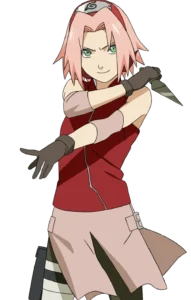
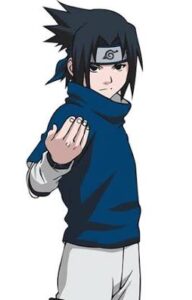
Naruto Uzumaki is the central protagonist of Naruto. He is a young shinobi from Konohagakure, the Hidden Leaf Village, and begins the story as a member of Team 7 alongside Sasuke Uchiha and Sakura Haruno under Kakashi Hatake.
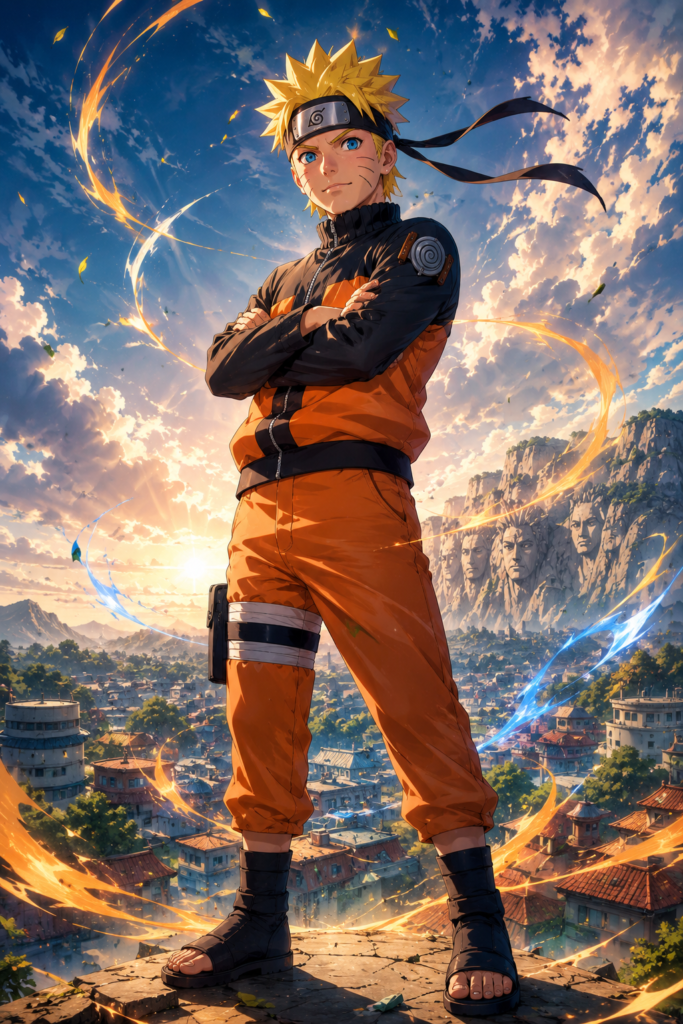
He has spiky blond hair, blue eyes and the three distinctive whisker-like markings on each cheek. His clothing changes considerably as he gets older, but orange remains a recurring part of his visual identity.
Naruto’s personality is deliberately difficult at first. He is immature, noisy and prone to making bad decisions, often because provoking people is easier for him than admitting that he wants their attention.
His dream is to become Hokage, but the motivation behind that dream changes as he grows.
At the beginning, becoming Hokage represents recognition. Naruto wants the village to stop treating him as an outsider.
Later, the position becomes much more about protecting the people who have accepted him.
His first appearance comes in the opening episode of Naruto, where the audience sees both his troublesome reputation and the loneliness behind it.
The character was created by Masashi Kishimoto and serves as the narrative center around which the franchise’s themes of loneliness, rivalry, perseverance and inherited hatred are built.
Abilities and Powers
Naruto’s fighting style changes repeatedly throughout the series, which is one reason his progression feels more substantial than simply giving him stronger versions of the same attack.
His signature technique is the Shadow Clone Jutsu.
Unlike a normal clone technique that creates an illusion, Naruto creates physical clones capable of interacting with the environment and fighting. His unusually large chakra reserves allow him to produce far more clones than most ninja could manage.
The technique eventually becomes more than a combat trick.
Naruto discovers that the experience gained by his clones returns to him when they disappear. He uses this property to dramatically accelerate his training, particularly when learning techniques that would otherwise require enormous amounts of time.
Rasengan
The Rasengan becomes Naruto’s most recognizable offensive technique.
Jiraiya teaches him the technique, which originally belonged to the Fourth Hokage, Minato Namikaze.
Naruto’s version develops through experimentation rather than perfect imitation. His difficulty controlling the technique initially leads him to use clones to divide the required tasks between himself and his copies.
That detail fits his character unusually well. Naruto often succeeds by finding a solution that works with his limitations rather than pretending those limitations do not exist.
Sage Mode
Naruto’s training at Mount Myoboku introduces Sage Mode.
By combining his own chakra with natural energy, he gains increased physical abilities and sensory perception.
More importantly, Sage Mode represents a point where Naruto begins relying less on the uncontrolled power associated with the Nine-Tails.
His battle against Pain is the clearest demonstration of how much this training has changed him.
Nine-Tails Chakra
The Nine-Tails inside Naruto is initially treated primarily as a dangerous source of power.
That relationship changes over time.
Naruto’s control over the Nine-Tails’ chakra develops gradually, and his eventual relationship with Kurama becomes fundamentally different from the hostile relationship established at the beginning of the story.
This is one of Naruto’s most important developments because he stops treating the creature inside him as simply a weapon.
Rasenshuriken
Naruto’s development of the Wind Release: Rasenshuriken demonstrates another important part of his combat philosophy.
The technique evolves from the Rasengan but adds Wind Release nature transformation, dramatically increasing its destructive potential.
Its initial use comes with a serious physical cost to Naruto, forcing him to learn how to use the technique more safely.
That pattern appears repeatedly throughout his story: Naruto develops an extremely powerful ability, discovers its limitations, then finds a way to overcome them.
Role in the Story
Naruto is not merely the strongest character the story eventually needs to defeat its villains.
He is the mechanism through which the series tests its central ideas.
The early story asks whether someone who has been rejected can earn acceptance.
The later story asks whether someone who has experienced rejection can refuse to pass that hatred on to somebody else.
That distinction becomes especially important during Naruto’s confrontation with Pain.
Major spoiler: Pain has suffered enormous loss and reaches the conclusion that peace can only exist if people understand the fear of pain themselves. Naruto has every reason to hate him after what happens to the Hidden Leaf, yet he chooses to hear Nagato’s reasoning before deciding what to do.
That decision is not a random display of kindness.
It is the logical result of Naruto’s entire character arc.
He knows what it feels like to be judged before anyone bothers to understand him. His response to Nagato is therefore also a statement about what kind of person Naruto wants to become.
Without Naruto, the series’ different conflicts would still exist, but they would not connect thematically in the same way.
The villains are not simply obstacles between Naruto and the Hokage title. They are different answers to the same problems Naruto has faced.
Naruto Compared With Other Shonen Protagonists
Naruto belongs to a familiar shonen archetype: the underestimated protagonist who begins at the bottom and eventually becomes extraordinarily powerful.
At first glance, there is not much separating him from characters such as Monkey D. Luffy from One Piece or Izuku Midoriya from My Hero Academia.
All three begin with major disadvantages. All three build relationships with people who influence their growth. All three eventually become figures capable of affecting the wider world.
The difference is what Naruto does with rejection.
Luffy generally treats his freedom as something nobody has the right to take away. Midoriya begins from admiration and insecurity, constantly measuring himself against an ideal of heroism.
Naruto starts from social exclusion.
He does not simply want to become strong. He wants people to acknowledge that he exists and that he matters.
That makes his later attitude toward enemies more interesting.
Naruto’s defining victories are often not about overpowering someone. They are about refusing to let their pain dictate his response.
This is particularly visible with Gaara and Nagato.
Both characters are shaped by isolation. Naruto could easily have become another version of them. Instead, his relationships with Iruka, Team 7, Jiraiya and others give him alternatives.
That is what distinguishes Naruto from the generic “never give up” protagonist.
His persistence matters because the story repeatedly gives him legitimate reasons to become bitter.
Naruto and Sasuke: The Relationship That Defines Him
Naruto’s relationship with Sasuke is arguably more important to his character than his desire to become Hokage.
The two begin as rivals who annoy each other, but Naruto gradually recognizes something familiar in Sasuke: another person who is isolated and unwilling to admit how much that isolation hurts.
Their first major clash in the Valley of the End makes the difference between them clear.
Sasuke chooses separation because he believes cutting himself away from others is necessary to achieve his goal.
Naruto sees that decision as unacceptable.
What makes their rivalry work is that neither character completely abandons the other emotionally, even after their relationship becomes violent.
Naruto’s determination to bring Sasuke back can seem excessive if viewed only as a friendship subplot.
It makes more sense when viewed through Naruto’s own childhood.
He understands what it means for someone to disappear emotionally before they disappear physically.
Sasuke therefore becomes the person Naruto refuses to give up on, even when almost everyone else believes that doing so is pointless.
That relationship also forces Naruto to mature.
Saving Sasuke cannot simply mean defeating him and dragging him home. Naruto eventually has to understand why Sasuke chose his path.
Why Fans Love Naruto
Naruto works because his personality is allowed to be irritating before it becomes inspiring.
That sounds strange, but it is important.
If Naruto were immediately wise, compassionate and talented, his development would lose much of its impact.
Early Naruto makes mistakes constantly. He boasts, acts impulsively and sometimes misunderstands situations that seem obvious to everyone around him.
But the series gives those flaws a reason.
He has spent much of his childhood without anyone teaching him how to behave like a secure, socially accepted child.
Iruka’s acceptance is therefore enormously important.
The scene where Iruka publicly acknowledges Naruto’s worth is one of the earliest moments that demonstrates what Naruto actually needs. He does not need another lecture about discipline. He needs one adult to recognize that there is a person underneath the troublemaking.
Later relationships build on that foundation.
Jiraiya teaches him more than techniques. Kakashi teaches him about teamwork and loss. Hinata sees the determination behind his loud personality. Gaara demonstrates what Naruto might have become without meaningful connections.
Even Kurama eventually becomes part of that progression.
Naruto’s appeal comes from the fact that his optimism is not ignorance.
He knows what hatred feels like.
He simply refuses to believe hatred is the only possible response.
The Biggest Missed Opportunity With Naruto
Naruto himself is not underused. If anything, the opposite is true.
The missed opportunity is how rarely the series allows him to interact deeply with the wider supporting cast once the story becomes increasingly focused on the main conflict.
Characters such as Rock Lee, Neji, Shino, Kiba and others are important during earlier portions of the franchise, but the expanding story gradually narrows its attention toward Naruto, Sasuke, Kakashi and the major political conflict.
That makes sense structurally, but it weakens one of the things that made the original series special.
Naruto is most interesting when his relationships force him to see something from another person’s perspective.
More extended interactions between Naruto and the wider Konoha cast could have reinforced that quality.
Instead, many of those characters become spectators to Naruto’s development.
That is not a flaw in Naruto’s characterization itself, but it is a missed opportunity for the story surrounding him.
Conclusion
Naruto Uzumaki succeeds as a protagonist because his greatest power is not his chakra, his Rasengan or even his eventual mastery of the Nine-Tails.
It is his ability to remain emotionally open after having every reason to close himself off.
His story starts with a lonely child trying to force the village to notice him. It eventually becomes the story of someone powerful enough to decide how the cycle of hatred continues.
That evolution is why Naruto remains more interesting than the basic “underdog shonen hero” description suggests.
He does become stronger. He does become Hokage. He does defeat increasingly powerful enemies.
But those are consequences of the character arc, not the point of it.
The more important achievement is that Naruto becomes someone who can understand people he has every reason to hate without becoming what they are.
That is what makes him worth a dedicated character page.
Frequently Asked Questions
Who is Naruto Uzumaki?
Naruto Uzumaki is the main protagonist of the Naruto franchise and a shinobi from the Hidden Leaf Village. He begins as an isolated young ninja who dreams of becoming Hokage and gradually becomes one of the most important figures in the shinobi world.
What is Naruto’s main goal?
Naruto initially wants to become Hokage because he believes the village will finally recognize and respect him. As he matures, protecting the village and the people he cares about becomes a much more important part of that goal.
What is Naruto’s strongest jutsu?
Naruto develops several extremely powerful techniques, including Sage Mode, Rasenshuriken and abilities using Kurama’s chakra. His most iconic basic technique is the Rasengan.
Why does Naruto have whisker marks on his face?
The whisker-like markings are connected to Naruto’s status as the Nine-Tails’ jinchuriki. They are present from birth and become one of his most recognizable physical features.
Who is Naruto’s closest rival?
Sasuke Uchiha is Naruto’s central rival. Their relationship develops from competition into a much deeper conflict involving friendship, ideology, revenge and their different ideas about how the shinobi world should change.
Does Naruto become Hokage?
Yes. Naruto eventually achieves his childhood dream of becoming the Seventh Hokage of the Hidden Leaf Village.
Who voices Naruto?
Naruto is voiced by Junko Takeuchi in the original Japanese version. The English dub voice is provided by Maile Flanagan.