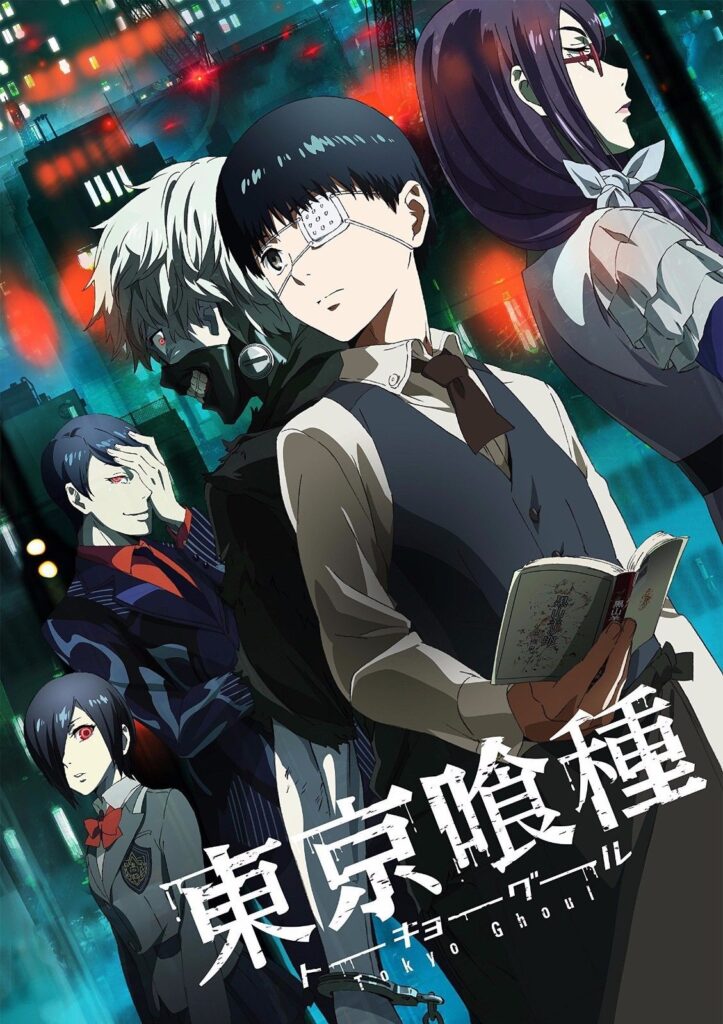
Tokyo Ghoul
Introduction
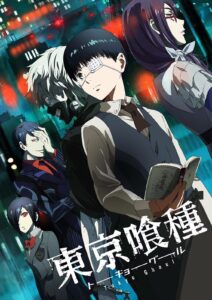
Ken Kaneki’s life changes in a single night, but what makes Tokyo Ghoul memorable is what happens after the transformation.
The frightening part isn’t simply that Kaneki becomes a ghoul. It is that he still thinks like the same quiet college student who loves books, wants a normal life, and would rather avoid confrontation. Suddenly, the ordinary things he took for granted—food, friendships, even his own reflection—become reminders that his body no longer belongs entirely to him.
The first season of Tokyo Ghoul uses that identity crisis as its foundation. Instead of beginning with a protagonist who wants to become stronger, it gives us someone desperately trying to remain the person he was before.
That makes Season 1 considerably more interesting than its reputation as simply a dark action anime suggests.
Overview
Tokyo looks like a normal modern city, but humans are not the only predators living in it.
Ghouls look almost identical to ordinary people, yet they survive by consuming human flesh. The problem becomes personal for Ken Kaneki after a date with Rize Kamishiro ends in a horrific accident and leaves him with organs belonging to a ghoul.
Kaneki survives, but he wakes up unable to eat normal food.
He has become something he has always feared.
What separates Tokyo Ghoul from a basic human-versus-monster story is that Kaneki isn’t immediately comfortable with his new identity. He doesn’t suddenly embrace violence or become an action hero. His first instinct is denial.
The series therefore works best when it treats being a ghoul as a personal and psychological problem rather than merely a source of supernatural abilities.
Kaneki has to learn how ghouls survive while simultaneously trying to convince himself that he isn’t one of them.
That contradiction drives most of the first season.
Story Summary — Spoiler-Free
Season 1 follows Kaneki as he attempts to survive in a world he didn’t know existed.
After his transformation, he is taken in by the people working at Anteiku, a coffee shop that secretly functions as a safe place for ghouls. Yoshimura and the others teach Kaneki how to survive without completely surrendering the humanity he is desperately trying to preserve.
Meanwhile, the Commission of Counter Ghoul, usually called the CCG, hunts ghouls throughout Tokyo.
This creates two sides that aren’t as simple as they initially appear.
The ghouls are capable of horrific violence, but some are simply trying to live. The investigators are protecting humans, yet their work also exposes them to a world where individual ghouls can have complicated motives and relationships.
Kaneki ends up caught between those perspectives.
The season gradually shifts from survival horror into something more action-focused. Early episodes spend more time on Kaneki’s hunger and confusion, while later episodes introduce larger conflicts involving Anteiku, Aogiri Tree and the CCG.
The change in tone is noticeable, but the underlying question remains the same:
How much of Kaneki’s humanity can survive after his body has changed?
Main Characters
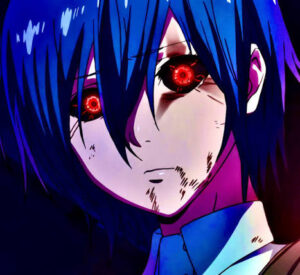
Ken Kaneki
Kaneki is one of the better examples of a protagonist whose biggest weakness is initially his defining characteristic.
He is gentle, physically weak and reluctant to hurt people. His love of books also gives him a quieter personality than the typical action protagonist.
That becomes important after his transformation.
Kaneki doesn’t want power. He wants his old life back.
His gradual change therefore feels less like a traditional hero’s journey and more like watching someone lose the ability to remain neutral.
The torture storyline later in the season becomes especially important because it attacks Kaneki’s belief that refusing violence will allow him to preserve his old identity.
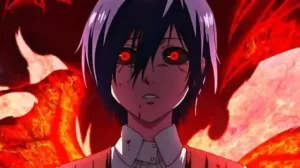
Touka Kirishima
Touka initially appears to be the exact opposite of Kaneki.
She is blunt, aggressive and completely accustomed to the rules of ghoul society. She has little patience for Kaneki’s hesitation and doesn’t treat his transformation as some tragic philosophical problem.
To her, he needs to learn how to survive.
But Touka is more than the angry fighter she first appears to be. Her connection to Anteiku and her relationships with people around her reveal someone who has learned to hide vulnerability behind aggression.
Her relationship with Kaneki works because neither character fully understands the other’s way of surviving.
Yoshimura
Yoshimura is the person who gives Anteiku its unusual atmosphere.
Rather than encouraging Kaneki to embrace his predatory side, he teaches him that ghouls don’t have to live entirely through violence.
That makes Anteiku more than just a convenient headquarters.
It becomes the first place where Kaneki discovers that being a ghoul doesn’t automatically mean becoming a monster.
Yoshimura’s calm personality also contrasts sharply with the violence taking place outside the coffee shop.
Hideyoshi Nagachika
Hide is important precisely because he doesn’t share Kaneki’s supernatural world.
He is Kaneki’s closest human friend and one of the strongest reminders of the life Kaneki is trying to protect.
Hide’s personality is energetic and sometimes deliberately annoying, but that makes his friendship with Kaneki feel more believable. He doesn’t treat Kaneki as some mysterious protagonist. He treats him like his friend.
That ordinary connection becomes increasingly valuable as Kaneki’s life becomes less ordinary.
Nishiki Nishio
Nishiki initially represents the kind of ghoul Kaneki is afraid of becoming.
He is territorial, aggressive and completely familiar with the rules of hunting humans.
But his storyline complicates that first impression.
His relationship with Kimi Nishino gives him an emotional dimension that Kaneki wouldn’t expect from someone he initially sees as simply another predator.
Rize Kamishiro
Rize’s role in the story is much larger than the short amount of time she spends interacting with Kaneki might suggest.
Her encounter with him creates the entire chain of events that follows.
More importantly, Rize becomes tied to Kaneki’s understanding of what has happened to his body.
She isn’t simply the person responsible for his transformation. She represents the moment his old life stopped being possible.
Why You Should Watch Tokyo Ghoul Season 1
The strongest reason to watch Season 1 is the way it makes ordinary situations uncomfortable.
Food is the obvious example.
For most anime protagonists, sitting down for a meal is completely unremarkable. For Kaneki, eating becomes a reminder that his body now rejects everything he used to enjoy.
The scenes at Anteiku work because the people around him understand his problem even when he doesn’t.
The first major battle against Nishiki also demonstrates how different Kaneki is from a conventional fighter. He doesn’t enter the conflict with confidence. He is terrified, confused and physically unprepared.
Later, the battle involving Hinami and her mother changes the emotional scale of the story. It becomes clear that the conflict isn’t simply humans versus monsters. There are families, friendships and innocent people caught inside it.
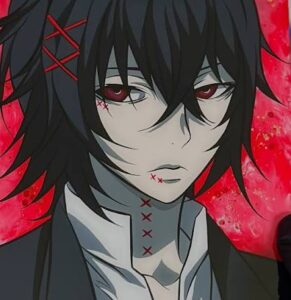
Then comes the Jason storyline.
That section pushes Kaneki’s identity crisis into something much darker and leads directly into the version of the character seen near the end of the season.
Animation & Art Style
Studio Pierrot gives Tokyo Ghoul a visual identity built around contrast.
Anteiku is warm and relatively comfortable. The coffee shop has softer lighting and feels almost disconnected from the violence outside.
The underground and battle sequences are much harsher.
The use of darkness, red blood and kagune designs makes the ghoul world feel physically different from ordinary Tokyo.
The kagune are particularly important to the visual identity of the show. Rather than making every ghoul fight with conventional weapons, the series gives them biological-looking structures that emerge from their bodies.
Kaneki’s transformation is reflected visually as well.
Early Kaneki often looks physically vulnerable. As the season progresses, his posture, facial expressions and fighting style become increasingly aggressive.
The difference is especially visible during the final stretch of the season.
The animation isn’t flawless, and some action sequences don’t maintain the same quality from episode to episode. But when the direction, music and imagery line up, Tokyo Ghoul can create some genuinely memorable scenes.
Music & Voice Acting
The biggest musical association with Tokyo Ghoul is impossible to ignore: “Unravel” by TK from Ling tosite sigure.
The opening became almost inseparable from Kaneki’s identity because its sound matches the emotional instability of the character. It isn’t simply an energetic action opening. It feels anxious and fractured, which fits a protagonist whose identity is falling apart.
The Japanese voice performance by Natsuki Hanae is equally important.
Kaneki has to sound different at different stages of the season without suddenly becoming an entirely different character. Hanae’s performance sells the fear and hesitation of early Kaneki particularly well.
His voice becomes harsher as the character’s psychological state deteriorates.
That progression matters because Kaneki’s transformation is supposed to feel uncomfortable, not simply cool.
The Real Appeal of Tokyo Ghoul Is Kaneki’s Identity Crisis
If you remove the fights, kagune and ghoul mythology, there is still a strong story underneath Tokyo Ghoul.
Kaneki doesn’t know where he belongs.
Humans see ghouls as monsters.
Ghouls often see humans as food or enemies.
Kaneki becomes both.
The most interesting scenes therefore aren’t necessarily the biggest battles. They are the moments where Kaneki has to make a choice that would have been unthinkable before his transformation.
Anteiku gives him one possible answer: coexistence.
Touka gives him another: accept reality and learn to survive.
Rize represents the predatory side he fears.
Jason represents what happens when humanity is repeatedly stripped away.
Kaneki’s character is pulled between all of these possibilities.
That is why the first season works best when viewed as a psychological transformation rather than a conventional power-up story.
Where to Watch Tokyo Ghoul Season 1
Streaming availability for Tokyo Ghoul varies by country and can change over time.
In India, current streaming listings show the series across services including Crunchyroll-related availability, while Netflix’s Indian page currently displays the title but may show different availability depending on the account and region.
Crunchyroll’s current listing provides Season 1 with both Japanese and English audio options, along with English, Spanish and Portuguese subtitles. Language availability can vary by region.
For readers watching the entire anime in order, the important thing is not to confuse the four-part anime structure:
Tokyo Ghoul → Tokyo Ghoul √A → Tokyo Ghoul:re → Tokyo Ghoul:re 2nd Season / Final Chapter.
If you’re building your AnimeVerse watch-order pages, Season 1 should naturally point readers toward Tokyo Ghoul √A after they finish this story.
Tokyo Ghoul vs Parasyte: Which Should You Watch?
Tokyo Ghoul and Parasyte -the maxim- are obvious comparisons because both revolve around humans encountering creatures that blur the line between human and monster.
But they approach the idea differently.
Parasyte is more interested in examining what makes someone human. Its protagonist Shinichi gradually adapts to the presence of Migi, and the story uses their relationship to explore morality, survival and human nature.
Tokyo Ghoul is more personal.
Kaneki doesn’t have a separate creature living alongside him. His own body has become the source of the conflict.
For someone who wants a tighter, more consistently structured story, I’d choose Parasyte.
For someone who wants a darker atmosphere, a larger supernatural society and a protagonist undergoing a more dramatic identity crisis, Tokyo Ghoul has the stronger appeal.
The first season of Tokyo Ghoul is also more emotionally interested in the question of belonging.
That’s its biggest advantage.
Manga vs Anime: Is the Manga Better?
Yes, if you become invested in the story.
The first anime season is recognizable as Tokyo Ghoul, but it compresses material from Sui Ishida’s manga and changes the emphasis of certain events.
That becomes particularly important once you move beyond Season 1.
The manga gives considerably more room to Kaneki’s internal thoughts, character relationships and the motivations behind different factions. Those details help explain why certain decisions carry more weight.
The anime can sometimes make Kaneki’s transformation feel faster than it does on the page.
This is one reason the anime becomes increasingly difficult to follow for viewers who haven’t read the manga.
The issue becomes even more noticeable when the story reaches Tokyo Ghoul √A, because the second season makes substantial changes to the source material.
If you enjoy Season 1 and want the most complete version of Kaneki’s story, reading the manga is strongly recommended.
You can also continue with the anime, but don’t expect the adaptation to follow the manga perfectly.
Why Tokyo Ghoul Season 1 Doesn’t Live Up to All the Hype
The biggest problem with Season 1 is that it sometimes moves too quickly through ideas that deserve more time.
Kaneki’s transformation is a huge psychological event, yet the series has to move through multiple characters, factions and conflicts within only 12 episodes.
As a result, some relationships feel like they are being established just before the story moves on to something bigger.
This is particularly noticeable with characters outside the main group.
The world clearly has much more going on than what Kaneki personally experiences, but Season 1 only has enough time to give glimpses of that larger conflict.
There is also a structural problem with Kaneki’s development.
His transformation is compelling because it is gradual, but the final portion of the season accelerates that development considerably.
The result is memorable, but some viewers may feel that the psychological transition happens faster than the earlier episodes prepared them for.
The season’s biggest strength—its intense focus on Kaneki—is therefore also one of its limitations.
Strengths
Strong protagonist concept
Kaneki’s conflict isn’t simply about defeating enemies. His body itself has become the thing he fears.
Excellent atmosphere
Few scenes feel completely safe once Kaneki enters the ghoul world. Even quiet conversations can carry an uncomfortable sense of danger.
Memorable soundtrack
“Unravel” remains one of the most recognizable anime openings of its era, and the music complements Kaneki’s psychological breakdown.
Interesting moral conflict
The show doesn’t make every ghoul evil or every human heroic.
Strong first-season ending
The final episodes provide a dramatic change in Kaneki’s character and establish the direction of the story moving forward.
Weaknesses
The biggest weakness is pacing.
The first season introduces a lot: ghoul society, the CCG, Anteiku, Aogiri Tree, multiple investigators and several important characters.
Some of those ideas receive only limited development.
The anime also leaves certain character motivations less developed than the manga.
And while the dark atmosphere is one of its biggest strengths, the constant violence and psychological suffering can make the later episodes feel exhausting rather than emotionally rewarding for some viewers.
Tokyo Ghoul is at its best when its horror has a character-driven purpose.
When it simply moves from one violent confrontation to another, some of that complexity gets lost.
Who Should Watch This Anime?
You should watch Tokyo Ghoul Season 1 if you enjoy dark supernatural stories where the protagonist’s transformation is as important as the action.
It is a particularly good choice if you like:
- Psychological horror
- Dark fantasy
- Supernatural action
- Morally complicated characters
- Human-versus-monster stories
- Identity-based character arcs
- Violent anime with serious themes
It is also a good entry point if you want a relatively short first season before committing to a longer story.
If you finish Season 1 and want to continue Kaneki’s story, the next entry is Tokyo Ghoul √A.
Who Should Skip This Anime?
Skip it if you want a light supernatural action series.
Tokyo Ghoul becomes increasingly violent and psychologically disturbing, particularly during Kaneki’s later experiences.
You should also avoid starting it if you strongly dislike adaptations that diverge from their source material.
And if you need every major character to receive extensive development within the first season, you may find the cast too large for the amount of screen time available.
What Comes After Tokyo Ghoul Season 1?
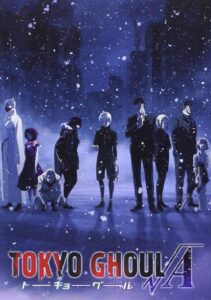
The anime continues with Tokyo Ghoul √A, commonly treated as Season 2.
After that comes Tokyo Ghoul:re, which is commonly listed as Season 3. Studio Pierrot officially lists Tokyo Ghoul:re as two 12-episode seasons, with the first airing from April to June 2018 and the second from October to December 2018.
For AnimeVerse’s four-season structure, the clean watch order is therefore:
- Tokyo Ghoul — Season 1
- Tokyo Ghoul √A — Season 2
- Tokyo Ghoul:re — Season 3
- Tokyo Ghoul:re 2nd Season / Final Chapter — Season 4
The later :re seasons introduce a different status quo and a different version of Kaneki’s story, so it’s better to experience them in order rather than jumping directly to the later entries.
Final Verdict
Tokyo Ghoul Season 1 is remembered for its violence, its kagune and, above all, “Unravel.”
But those aren’t actually the reason it remains interesting.
The real strength of the first season is Kaneki himself.
Watching a quiet college student realize that he can no longer live the life he had planned gives the series a strong emotional foundation. The best episodes aren’t necessarily about who wins a fight. They’re about Kaneki realizing that there may no longer be a clean line separating him from the monsters he once feared.
The anime isn’t a perfect adaptation, and its pacing leaves some characters and ideas underdeveloped. Those problems become more important as the story continues.
Still, Season 1 succeeds at something difficult: it makes the protagonist’s transformation feel frightening before making it look powerful.
If you’re looking for a dark supernatural anime with a memorable protagonist, strong atmosphere and one of anime’s most recognizable openings, Tokyo Ghoul Season 1 is absolutely worth watching.
Just remember that the anime’s story doesn’t end here.
The next step is Tokyo Ghoul √A, followed by Tokyo Ghoul:re and its Final Chapter.